
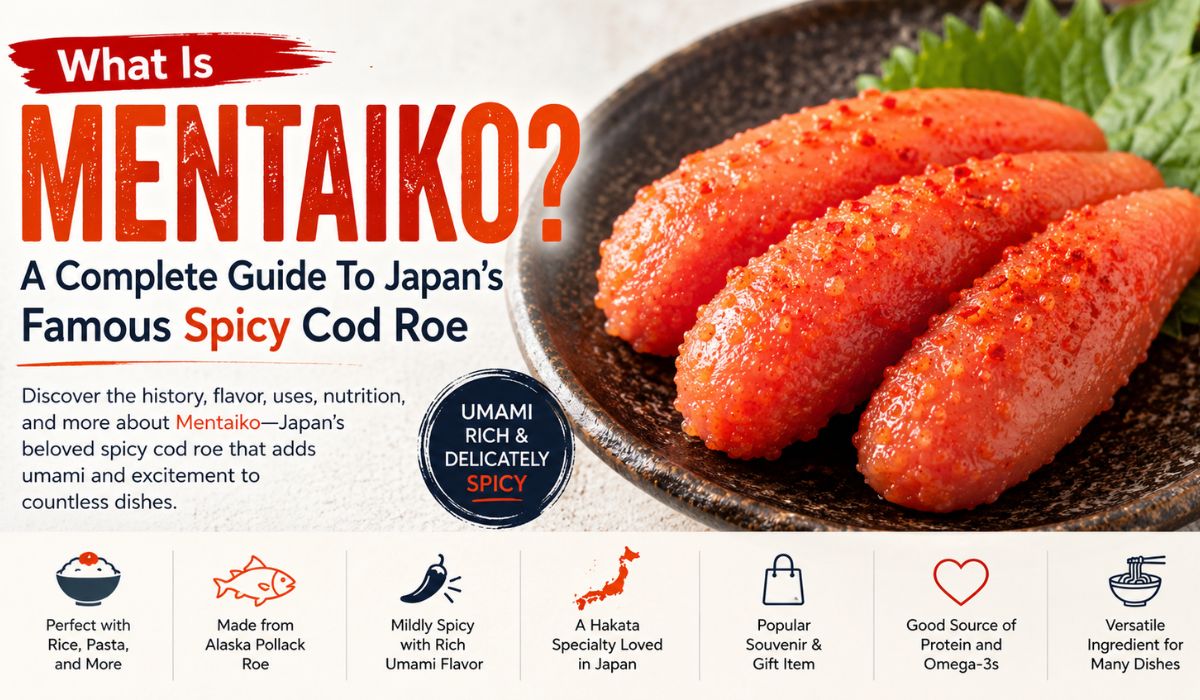
Mentaiko is one of Japan’s most beloved seafood specialties, known for its rich umami flavor, delicate texture, and gentle spicy kick. Made from cured Alaska Pollack Roe seasoned with chili peppers and other ingredients, Mentaiko has become a staple in Japanese cuisine and a favorite among food lovers worldwide. While it is strongly associated with Hakata in Fukuoka Prefecture, its story stretches across borders and generations, making it one of the most fascinating foods in East Asian culinary history.
In recent years, Mentaiko has gained global attention thanks to the growing popularity of Japanese food. From Mentaiko Pasta and Rice Bowls to modern fusion dishes, chefs and home cooks alike appreciate its ability to add depth and flavor to simple meals. Whether you are discovering Mentaiko for the first time or want to learn more about this iconic ingredient, this guide covers everything you need to know.
What Is Mentaiko?
Mentaiko is a traditional Japanese food made from the roe sacs of Alaska Pollack, a fish commonly found in cold northern waters. The roe is carefully cleaned, cured with salt, and seasoned with chili peppers and other flavorings. The result is a seafood delicacy with a unique balance of saltiness, spice, and umami.
The name Mentaiko generally refers to seasoned pollack roe, while Karashi Mentaiko specifically indicates the spicy version. Today, most people use the word Mentaiko when talking about the spicy variety. Its bright color and distinctive taste make it instantly recognizable in Japanese cuisine.
The History Of Mentaiko
The story of Mentaiko begins on the Korean Peninsula during the late nineteenth and early twentieth centuries. Pollack fishing was common, and fish roe was already being used in various traditional foods. During this period, a Japanese businessman named Izuha Iguchi recognized the potential of pollack roe and began experimenting with ways to preserve and flavor it.
In 1907, he established a company in Busan and introduced a commercial version of seasoned pollack roe. His product became popular across Korea and Japan. Although World War II disrupted production and trade, the memory of its unique flavor remained strong. Japanese families who had lived in Korea later recreated the product in Japan, helping establish the foundation for the modern Mentaiko industry.
Why Mentaiko Is Linked To Hakata
Many people assume Mentaiko originated in Hakata, but the connection developed after World War II. Producers in Fukuoka and nearby regions began manufacturing their own versions based on earlier recipes. These products became highly popular among travelers and were sold in train stations, airports, and local markets.
As demand increased, Hakata became the center of Mentaiko production and marketing. Over time, the product became one of the city’s most famous culinary symbols. Today, visitors to Fukuoka often purchase Mentaiko as a souvenir, and the region remains synonymous with high-quality Mentaiko production.
How Mentaiko Is Made
Creating high-quality Mentaiko requires skill, patience, and careful ingredient selection. Producers begin by choosing fresh Alaska Pollack Roe. The roe sacs are inspected to ensure quality and consistency before the curing process begins.
The roe is then salted and seasoned with a blend of ingredients that may include chili peppers, sake, kombu, citrus extracts, and other seasonings. The curing process allows the flavors to penetrate the roe while preserving its texture. Depending on the producer, recipes may be traditional family secrets passed down through generations.
What Does Mentaiko Taste Like?
The flavor of Mentaiko is difficult to compare to any other food. It combines savory seafood notes with a pleasant saltiness and mild heat. The roe bursts gently when eaten, releasing layers of umami that linger on the palate.
Good-quality Mentaiko is not overwhelmingly spicy. Instead, the chili seasoning enhances the natural flavor of the roe. Some varieties are mild and delicate, while others offer a stronger kick. The texture is equally important, providing a satisfying contrast between firmness and tenderness.
Mentaiko Vs Tarako
One of the most common questions concerns the difference between Mentaiko and Tarako. Both foods use Alaska Pollack Roe, but the preparation differs significantly.
Tarako is usually cured with salt alone, creating a milder flavor profile. Mentaiko, by contrast, includes chili peppers and additional seasonings that give it a more complex taste. Mentaiko often appears deeper red in color and delivers a richer, more dynamic eating experience. Both are popular in Japan, but Mentaiko is generally considered the more flavorful option.
Popular Ways To Eat Mentaiko
Traditionally, Mentaiko is served alongside steamed rice. This simple combination allows the flavor of the roe to shine. Many Japanese households enjoy it as part of breakfast, lunch, or dinner.
Modern culinary uses have expanded far beyond traditional meals. Mentaiko Pasta has become one of Japan’s most popular fusion dishes, combining Italian pasta with Japanese flavors. Mentaiko is also used in Rice Balls, Sushi Rolls, Omelets, Sandwiches, Salads, and Seafood Dishes. Its versatility makes it a favorite ingredient among chefs seeking to add bold flavor without overwhelming a dish.
Mentaiko In Modern Japanese Cuisine
Today, Mentaiko appears in both casual and fine dining establishments throughout Japan. Restaurants frequently feature it in creative recipes that blend Japanese traditions with international influences. Its ability to pair with butter, cream, noodles, seafood, and vegetables has made it especially valuable in contemporary cooking.
Food manufacturers have also introduced Mentaiko-Flavored Snacks, Crackers, Chips, Sauces, and Seasonings. These products have helped introduce the flavor to consumers who may not be familiar with traditional seafood preparations.
Nutritional Value Of Mentaiko
Mentaiko offers several nutritional benefits when consumed as part of a balanced diet. It contains high-quality protein, which supports muscle maintenance and overall health. It also provides Omega-3 Fatty Acids, which are important for heart and brain function.
In addition, Mentaiko contains Vitamin B12, Selenium, Phosphorus, and other essential nutrients. However, because it is cured with salt, it can be relatively high in sodium. Moderation is important, particularly for individuals monitoring their salt intake.
How To Buy Quality Mentaiko
When shopping for Mentaiko, freshness is one of the most important considerations. High-quality roe should have a vibrant appearance and a pleasant seafood aroma without any unpleasant smell.
Consumers can find Mentaiko fresh, refrigerated, or frozen. Premium producers often emphasize carefully sourced roe and traditional curing methods. Reading labels and purchasing from reputable suppliers can help ensure a better experience.
Proper Storage And Handling
Because Mentaiko is a seafood product, proper storage is essential. Fresh Mentaiko should be kept refrigerated and consumed within the recommended time frame provided by the manufacturer.
Freezing is also a common storage method. Many people freeze individual portions to preserve freshness and convenience. When thawing, gradual refrigeration is usually preferred to maintain texture and flavor.
Mentaiko In Japanese Food Culture
Beyond its culinary value, Mentaiko holds a special place in Japanese culture. It reflects the country’s appreciation for carefully prepared seafood and regional food traditions. For many people, Mentaiko evokes memories of family meals, travel experiences, and local specialties.
Its status as a famous Hakata product has also contributed to regional pride. Food festivals, specialty stores, and tourism campaigns frequently highlight Mentaiko as one of Fukuoka’s signature foods.
Interesting Facts About Mentaiko
One fascinating aspect of Mentaiko is how it represents cultural exchange. Although its roots can be traced to Korea, it evolved into a uniquely Japanese specialty through local innovation and adaptation. Few foods illustrate this blend of influences so clearly.
Another interesting fact is its remarkable versatility. While many traditional seafood products remain tied to specific serving methods, Mentaiko has successfully adapted to modern tastes. From gourmet restaurants to convenience stores, it continues to find new audiences. Its growing popularity outside Japan demonstrates how traditional foods can thrive in a global culinary landscape.
Why Mentaiko Continues To Grow In Popularity
The increasing popularity of Japanese cuisine has introduced millions of people to ingredients they may never have encountered before. Mentaiko stands out because it delivers a distinctive flavor that is both approachable and memorable.
Social media, food tourism, and international restaurants have further increased awareness of Mentaiko. As consumers seek authentic culinary experiences, interest in regional Japanese specialties continues to rise. Mentaiko’s combination of history, flavor, and versatility positions it as one of Japan’s most enduring seafood delicacies.
Final Thoughts
Mentaiko is much more than Spicy Cod Roe. It is a food with a rich history, deep cultural significance, and remarkable culinary versatility. From its origins on the Korean Peninsula to its transformation into a celebrated Hakata specialty, Mentaiko has traveled a fascinating journey that reflects both tradition and innovation.
Whether enjoyed with rice, stirred into pasta, added to sushi, or featured in modern fusion recipes, Mentaiko continues to captivate food lovers around the world. Its balance of spice, umami, and texture makes it one of the most distinctive ingredients in Japanese cuisine. As global interest in authentic food experiences grows in 2026 and beyond, Mentaiko remains a delicious example of how regional specialties can earn worldwide appreciation.
FAQs About Mentaiko
Is Mentaiko Raw Or Cooked?
Mentaiko is generally cured rather than cooked. The roe is preserved through salting and seasoning, making it safe to eat according to food safety standards. It may be served as is or incorporated into cooked dishes.
Is Mentaiko Very Spicy?
Most Mentaiko is only mildly spicy. The chili seasoning enhances flavor rather than creating intense heat. Some specialty varieties are spicier, but traditional Mentaiko usually maintains a balanced taste.
What Fish Is Used To Make Mentaiko?
Mentaiko is made from the roe of Alaska Pollack, also known as Walleye Pollock. This fish provides the eggs used in both Mentaiko and Tarako.
What Is The Difference Between Mentaiko And Caviar?
Caviar traditionally refers to sturgeon roe. Mentaiko is made from Pollack Roe that has been cured and seasoned. The flavor, texture, production methods, and cultural traditions are quite different.
Can Mentaiko Be Frozen?
Yes. Freezing is one of the most common ways to preserve Mentaiko. Properly frozen Mentaiko can maintain its quality for extended periods when stored correctly.
What Foods Pair Well With Mentaiko?
Mentaiko pairs exceptionally well with Rice, Pasta, Noodles, Seafood, Eggs, Vegetables, Bread, and Sushi. Its savory flavor complements a wide variety of ingredients.
Why Is Hakata Famous For Mentaiko?
Hakata became a major production and distribution center after World War II. Local producers helped popularize Mentaiko throughout Japan, eventually making it one of the region’s most recognizable specialties.
Is Mentaiko Healthy?
Mentaiko provides Protein, Omega-3 Fatty Acids, Vitamin B12, and important minerals. However, because it contains salt from the curing process, it is best enjoyed as part of a balanced diet.
Recommended For You: BMVX4 Explained: Features, Performance, and Why Drivers Love It