
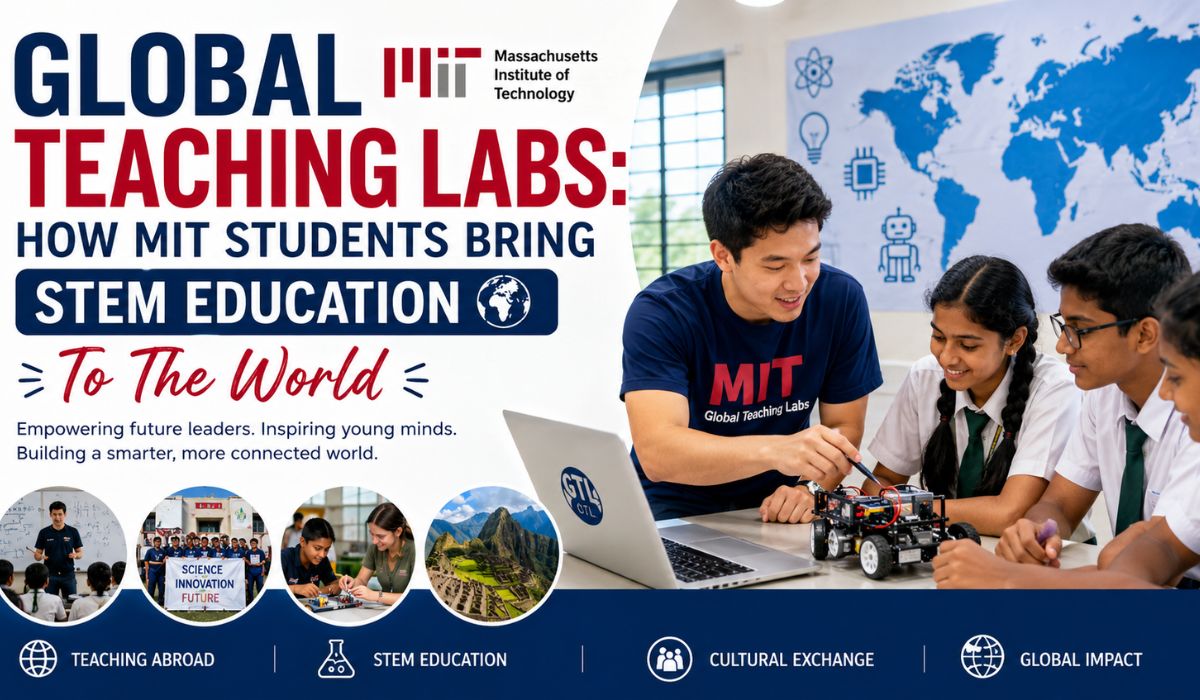
Global Teaching Labs is one of the most distinctive international education programs offered by the Massachusetts Institute of Technology (MIT). Managed through MIT International Science And Technology Initiatives (MISTI), the program sends talented MIT students to schools and universities around the world where they teach Science, Technology, Engineering, And Mathematics (STEM) subjects. While the idea may sound simple, the impact is remarkable. Students share advanced knowledge with learners in different countries while gaining valuable leadership, communication, and cultural skills themselves.
In 2026, Global Teaching Labs continues to attract attention from educators, students, and institutions seeking meaningful international learning experiences. The program demonstrates that education is not only about acquiring knowledge but also about sharing it. By placing MIT students in real classrooms across multiple continents, Global Teaching Labs creates opportunities for collaboration, innovation, and mutual growth. It represents a powerful example of how international teaching programs can help prepare future STEM leaders while supporting educational development worldwide.
What Is Global Teaching Labs?
Global Teaching Labs is an international teaching initiative designed to connect MIT students with educational institutions around the world. The program follows MIT’s famous philosophy of experiential learning, often described as learning by doing. In the case of GTL, students learn by teaching.
Participants travel abroad during MIT’s January Independent Activities Period and spend several weeks teaching STEM-related subjects. These may include Artificial Intelligence, Machine Learning, Robotics, Renewable Energy, Mathematics, Programming, Physics, Chemistry, Sustainability, Entrepreneurship, and many other specialized topics. The goal is not only to deliver technical knowledge but also to encourage creativity, critical thinking, and problem-solving among students in host institutions.
The Story Behind Global Teaching Labs
The roots of Global Teaching Labs can be traced to MIT’s broader mission of creating global connections through education, science, and technology. MISTI was established to give students practical international experiences while strengthening partnerships between MIT and institutions around the world.
Over the years, Global Teaching Labs has expanded significantly. What began as a smaller teaching initiative has become a respected international STEM education program operating across numerous countries. As global challenges increasingly require international cooperation, programs like GTL have become more relevant than ever. The initiative helps create educational bridges between different cultures while promoting innovation and scientific learning on a global scale.
How Global Teaching Labs Works
The Global Teaching Labs process begins several months before students ever board a plane. Interested MIT students submit applications outlining their academic strengths, teaching interests, and international experience. Candidates often participate in interviews where communication skills, adaptability, and enthusiasm for teaching are carefully evaluated.
Once selected, students are matched with host schools and universities based on their expertise and institutional needs. During their placements, participants may teach lessons, assist with laboratory work, conduct workshops, mentor students, and collaborate with local educators. The program’s structure ensures that participants contribute meaningful educational value while gaining hands-on experience in international teaching environments.
Global Teaching Labs 2026 Around The World
One of the most impressive aspects of Global Teaching Labs is its international reach. In 2026, placements continue across Africa, Asia, Europe, Latin America, and the Middle East. Countries have included locations such as Angola, Rwanda, South Africa, Botswana, Armenia, Cyprus, Chile, Uruguay, Mexico, Bahrain, India, Nepal, Korea, Spain, Italy, Germany, Kazakhstan, and several others.
Each location offers a unique educational environment. Some placements focus on advanced technical subjects, while others emphasize foundational STEM education. Students often discover that teaching methods, classroom culture, and educational priorities vary significantly from country to country. This diversity becomes one of the most valuable aspects of the experience.
STEM Subjects That Shape The Future
A major strength of Global Teaching Labs is the variety of subjects offered. STEM is a broad field, and GTL reflects that diversity through its teaching opportunities. Artificial Intelligence and Machine Learning have become increasingly popular topics as countries invest in digital transformation and emerging technologies.
At the same time, traditional disciplines remain important. Mathematics, Physics, Chemistry, Biology, and Engineering continue to form the foundation of many placements. Sustainability, Climate Studies, Renewable Energy, Entrepreneurship, Data Science, Python Programming, Scratch Programming, and Robotics also play important roles. This wide range of subjects allows host institutions to benefit from knowledge that aligns with modern research and industry needs.
Preparing Students For International Teaching
Success in a classroom requires much more than technical expertise. For this reason, Global Teaching Labs includes extensive preparation before departure. Selected students participate in multiple training sessions during the fall semester.
These sessions cover teaching strategies, classroom engagement, cultural awareness, communication techniques, and country-specific preparation. Students learn how to adapt lessons to different educational systems and cultural contexts. They also explore common challenges that may arise when teaching internationally. This preparation helps participants enter their placements with confidence while remaining respectful and adaptable to local needs.
Who Can Apply For Global Teaching Labs?
Global Teaching Labs is open to MIT students who demonstrate strong academic performance and a genuine interest in teaching. Although academic achievement is important, the selection process goes beyond grades. Program coordinators look for students who can communicate clearly, inspire learners, and represent MIT professionally abroad.
Language skills may also play a role depending on the destination. Some placements prefer applicants who speak Spanish, French, Portuguese, Korean, or other local languages. Even when language requirements are flexible, cultural openness and willingness to adapt remain essential qualities. Because the program is highly competitive, successful applicants typically combine strong technical knowledge with excellent interpersonal skills.
Funding And Accessibility
Many students are surprised to learn that Global Teaching Labs is designed to minimize financial barriers. The program is generally structured to be cost-neutral for participants. Major expenses such as airfare and housing are typically covered through a combination of MIT support, donors, host institutions, and partner organizations.
Additional support is often available for local transportation and meals. This funding model allows talented students from different backgrounds to participate without facing significant financial obstacles. Accessibility remains one of the reasons GTL continues to attract a diverse group of applicants each year.
Life Inside A Global Teaching Labs Placement
A typical day in Global Teaching Labs can be both challenging and rewarding. Participants often spend mornings preparing lessons and afternoons teaching classes, leading discussions, or supervising practical activities. Depending on the host institution, students may work with high school learners, university students, or both.
Outside the classroom, cultural experiences become an important part of daily life. Participants explore local communities, learn about traditions, and build friendships with students and educators. These interactions often become some of the most memorable aspects of the experience. The combination of teaching and cultural immersion creates learning opportunities that extend far beyond academic content.
The Personal Benefits For MIT Students
Global Teaching Labs helps participants develop skills that remain valuable throughout their careers. Public speaking becomes more natural as students explain complex concepts to diverse audiences. Leadership skills improve through classroom management and mentoring responsibilities.
Participants also gain confidence in cross-cultural communication. They learn how to adapt their teaching style, respond to unexpected situations, and work effectively with people from different backgrounds. These experiences strengthen problem-solving abilities and emotional intelligence while preparing students for increasingly global professional environments.
The Educational Impact On Host Institutions
The benefits of Global Teaching Labs extend well beyond MIT. Host schools and universities gain access to highly motivated students who bring fresh perspectives and innovative teaching methods. Many classrooms benefit from interactive activities, project-based learning, and exposure to cutting-edge STEM topics.
Students in host institutions often gain new insights into scientific thinking and problem-solving approaches. Local educators may also exchange ideas with MIT participants, creating professional learning opportunities for both sides. This collaborative model ensures that knowledge flows in multiple directions rather than only from teacher to student.
Why Global Teaching Labs Stands Out
Many international education opportunities focus primarily on study abroad or internships. Global Teaching Labs offers something different. Instead of being passive observers, participants become active contributors to education and knowledge sharing.
Teaching requires a deeper understanding of a subject than simply studying it. Students must organize information, communicate clearly, and respond to questions in real time. This combination of teaching, leadership, STEM outreach, and cultural exchange makes GTL one of MIT’s most distinctive global programs. It provides practical experience that is difficult to replicate through traditional classroom learning alone.
Long-Term Influence On Future Leaders
The impact of Global Teaching Labs often continues long after participants return home. Many alumni report that the experience shaped their career goals and broadened their understanding of global challenges. Some pursue careers in education, research, public service, entrepreneurship, or international development as a result of their experiences.
The program also reinforces the importance of global collaboration. By working across cultural and geographic boundaries, participants learn that innovation often emerges when diverse perspectives come together. These lessons remain valuable in a world where scientific and technological challenges increasingly require international cooperation.
Application Timeline And What To Expect
Students interested in Global Teaching Labs should begin preparing well before the application deadline. Applications typically open in late summer, followed by information sessions, interviews, and selection decisions during the fall. Successful candidates then participate in mandatory training sessions before traveling abroad in January.
Applicants benefit from demonstrating both technical expertise and enthusiasm for teaching. Previous mentoring, tutoring, leadership, or outreach experience can strengthen an application. Since placements are competitive, thoughtful preparation and genuine interest in international education can make a meaningful difference.
Conclusion
Global Teaching Labs represents the best qualities of modern experiential education. It combines STEM teaching, international engagement, leadership development, and cultural exchange into one powerful program. By sending MIT students into classrooms around the world, it helps spread knowledge while fostering understanding between people from different backgrounds.
In 2026, Global Teaching Labs remains a remarkable example of how education can connect communities and inspire future leaders. The program demonstrates that teaching is one of the most effective ways to learn and that global experiences can transform both educators and students. As STEM education becomes increasingly important worldwide, initiatives like GTL show how collaboration, curiosity, and shared learning can help build a stronger future for everyone.
FAQs About Global Teaching Labs
What Is Global Teaching Labs?
Global Teaching Labs is an international teaching program run by MIT through MISTI. It sends MIT students abroad to teach STEM subjects in schools and universities while promoting cross-cultural learning and educational collaboration.
How Long Does Global Teaching Labs Last?
Most Global Teaching Labs placements last approximately three to four weeks during MIT’s January Independent Activities Period. The experience includes both classroom teaching and cultural immersion activities.
Who Can Participate In Global Teaching Labs?
The program is generally open to MIT undergraduate and graduate students who meet academic requirements, complete the application process, and demonstrate strong communication and teaching potential.
Does Global Teaching Labs Cover Travel Expenses?
Yes. The program is designed to be largely cost-neutral. Airfare, housing, and certain travel-related expenses are typically supported through program funding and institutional partnerships.
What Subjects Are Taught Through Global Teaching Labs?
Subjects vary by location but often include Artificial Intelligence, Robotics, Mathematics, Physics, Chemistry, Sustainability, Renewable Energy, Programming, Entrepreneurship, Data Science, and Engineering topics.
Is Global Teaching Labs Competitive?
Yes. Global Teaching Labs attracts many qualified applicants each year. Selection is based on academic strength, communication skills, teaching ability, adaptability, leadership potential, and overall fit for international placements.
What Skills Do Participants Gain?
Participants develop leadership, public speaking, teaching, communication, problem-solving, teamwork, and cross-cultural collaboration skills. These abilities are valuable in both academic and professional settings.
Why Is Global Teaching Labs Important?
Global Teaching Labs is important because it combines experiential learning, international education, and STEM outreach. The program benefits both MIT students and host institutions while encouraging global understanding and educational innovation.
Recommended For You: Tsunaihaiya: The Story Behind Japan’s Unique Handmade Silver Jewelry Brand