
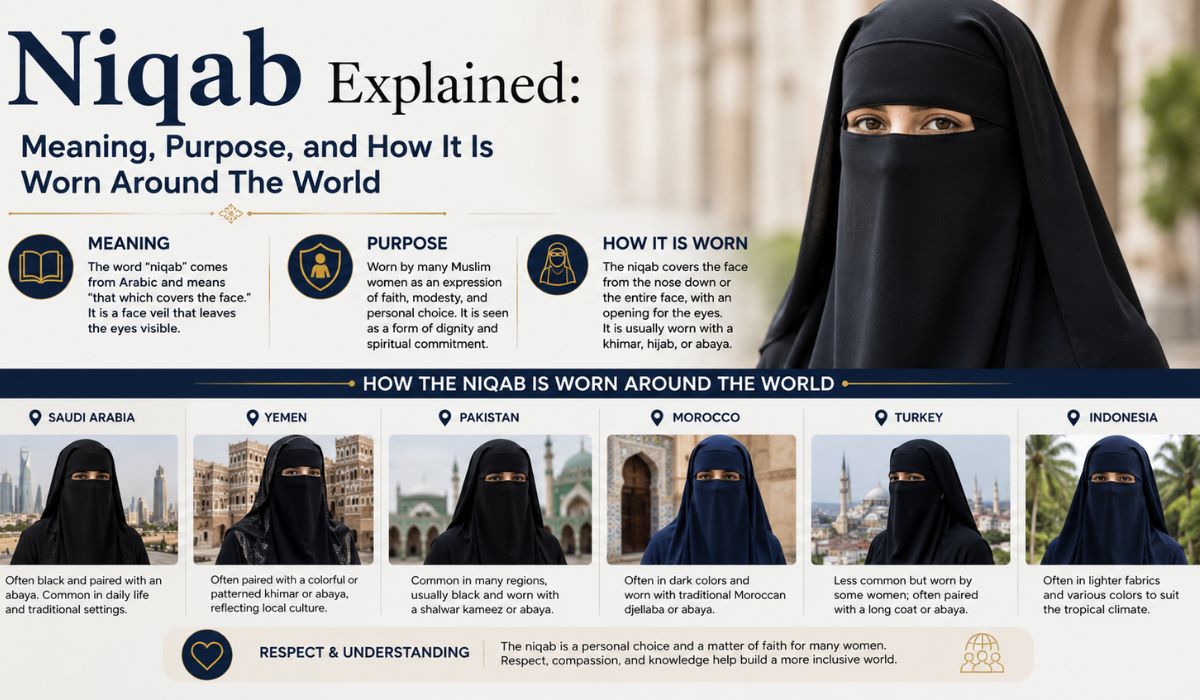
The niqab is one of the most recognized forms of Islamic face covering worn by some Muslim women across the world. While often discussed in media and public debates, its true meaning is not always well understood. The niqab is not simply a piece of fabric; for many women, it represents faith, identity, modesty, and personal choice. In this article, we explore the niqab in detail, including its meaning, religious significance, global use, and how it fits into modern society. By understanding it more clearly, readers can gain a balanced and respectful perspective on a practice that is deeply personal and culturally significant for millions of people.
Meaning Of Niqab
The niqab is a face veil worn by some Muslim women that covers the face while leaving the eyes visible. In most cases, it is worn along with a headscarf that covers the hair, neck, and shoulders. The word “niqab” comes from Arabic and refers specifically to a covering that conceals the face. Unlike general head coverings, the niqab focuses on facial modesty, making it one of the more covering forms of dress in Islamic clothing traditions. However, it is important to understand that its use varies widely depending on personal belief, culture, and interpretation of religious teachings.
Religious Significance Of Niqab
The niqab holds different meanings within Islamic scholarship and practice. Some Muslim women choose to wear it as an expression of devotion, modesty, and closeness to God. Others may follow cultural traditions where it is commonly worn. Islamic teachings on modesty encourage both men and women to dress and behave modestly, but scholars differ on whether face covering is required. Because of this variation, the niqab is not universally mandatory in Islam. Instead, it is often seen as a personal or cultural interpretation of modesty rather than a strict religious obligation.
Niqab Vs Hijab Explained
The niqab is often confused with the hijab, but they are not the same. The hijab typically refers to a headscarf that covers the hair, neck, and sometimes shoulders, while leaving the face visible. The niqab, on the other hand, covers the face completely except for the eyes. This difference is important in understanding Islamic dress practices, as many Muslim women wear the hijab but not the niqab. Both forms represent modesty, but they differ in coverage and interpretation. This distinction helps clarify misconceptions often seen in global discussions.
Styles Of Niqab Around The World
The niqab is not a single uniform garment. It comes in various styles depending on region, culture, and personal preference. Some niqabs are simple face veils tied behind the head, while others are layered with additional coverings for comfort or style. In some regions, lightweight fabrics are preferred due to climate conditions, while in others, thicker materials are used for durability. These variations show that the niqab is adaptable and influenced by local traditions, fashion choices, and practical needs, rather than being one fixed design.
Reasons Women Wear Niqab
Women wear the niqab for many different reasons, and it is important not to assume a single explanation. For some, it is a deeply personal religious choice that reflects their understanding of modesty. For others, it may be part of cultural tradition passed down through generations. Some women also describe wearing the niqab as a way to feel privacy and reduce unwanted attention in public spaces. In all cases, the decision is often personal and shaped by a combination of faith, identity, and lifestyle preferences.
Niqab Around The World
The niqab is worn in various countries, especially in parts of the Middle East, South Asia, and North Africa. However, its presence and acceptance differ widely depending on local culture and social norms. In some regions, it is common and widely accepted, while in others it is rare or seen as unusual. Global migration has also spread awareness of the niqab to Western countries, where Muslim communities may choose to wear it as part of their identity. This global diversity highlights the cultural richness behind Islamic dress practices.
Legal Status Of Niqab
The legal status of the niqab varies significantly around the world. In some countries, it is fully permitted and protected as a form of religious expression. In others, there are restrictions or bans on face coverings in certain public spaces, often justified by security or identification concerns. These laws are often debated and reflect broader discussions about religious freedom, public safety, and cultural integration. As a result, the niqab remains a topic of legal and social discussion in many parts of the world.
Misconceptions About Niqab
There are many misconceptions about the niqab, often due to limited understanding or media representation. One common misunderstanding is that women are always forced to wear it, which is not universally true. While coercion can exist in some cases, many women choose it voluntarily. Another misconception is that it represents extremism, which is inaccurate and unfair. In reality, the niqab is a personal or cultural practice for many Muslim women and should not be linked to political or extremist narratives.
Niqab In Modern Society
In modern society, the niqab is often at the center of cultural discussions about identity, freedom, and diversity. In increasingly multicultural cities, people from different backgrounds interact daily, making the niqab more visible in public life. This visibility has led to conversations about acceptance, inclusion, and respect for personal choices. While opinions differ widely, many societies continue to navigate how to balance individual freedoms with shared public norms in a respectful and lawful way.
Challenges Faced By Niqab Wearers
Women who wear the niqab may face unique challenges in daily life. These can include social misunderstanding, difficulty in communication, or discomfort in professional environments. In some cases, they may also encounter bias or discrimination. Despite these challenges, many women continue to wear the niqab confidently, supported by their personal beliefs and communities. Understanding these experiences helps build empathy and encourages more respectful social interactions.
Evolution Of Niqab In Modern Fashion
Over time, the niqab has also seen changes influenced by modern fashion trends. Designers in some regions have introduced new fabrics, colors, and lightweight materials to make it more comfortable and adaptable. While its core purpose remains the same for those who wear it, these changes show that traditional clothing can evolve with time. The blending of tradition and modern design reflects how cultural garments continue to adapt in a globalized world.
Communication And Identity
One important aspect of wearing the niqab is how it affects communication and identity. Since facial expressions are partially covered, communication often relies more on voice and body language. For many wearers, this becomes a natural part of daily interaction. At the same time, the niqab can also serve as a strong marker of identity, helping women express their beliefs and cultural belonging in a visible way.
Media Representation And Public Debate
The niqab is frequently discussed in global media, often sparking debates about religion, freedom, and security. Unfortunately, media portrayals are not always balanced, and this can lead to misunderstandings. Some discussions focus on restrictions, while others highlight personal stories of women who choose to wear it. A fair understanding requires looking at multiple perspectives rather than relying on a single narrative. Balanced information helps reduce stereotypes and encourages respectful dialogue.
Conclusion
The niqab is a meaningful and complex part of Islamic dress worn by some Muslim women around the world. It represents faith, modesty, identity, and personal choice for those who wear it, while also being viewed differently across cultures and societies. Understanding the niqab requires looking beyond appearances and considering the personal, cultural, and religious reasons behind it. By learning about it in a respectful and informed way, we can build greater awareness and appreciation for diversity in how people express their beliefs and identities.
FAQs About Niqab
What Is A Niqab?
A niqab is a face veil worn by some Muslim women that covers the face while leaving the eyes visible. It is usually worn with a headscarf that covers the hair and neck, and it is associated with modest dressing in Islam.
Is Niqab Mandatory In Islam?
The niqab is not universally mandatory in Islam. Different scholars and communities interpret modesty guidelines differently, and many Muslim women choose whether or not to wear it based on personal belief and cultural practice.
What Is The Difference Between Niqab And Hijab?
The hijab covers the hair, neck, and shoulders but leaves the face visible, while the niqab covers the face except for the eyes. Both are forms of modest dress but differ in coverage.
Why Do Women Wear Niqab?
Women wear the niqab for various reasons including religious devotion, cultural tradition, personal comfort, and a desire for privacy or modesty in public spaces.
Is Niqab Worn In Every Muslim Country?
No, the niqab is not worn in every Muslim country. Its use varies widely depending on cultural norms, regional traditions, and personal choice.
Are There Laws About Wearing Niqab?
Yes, some countries allow it freely while others have restrictions or bans in certain public places. These laws differ depending on local policies regarding security and public identification.
Is Niqab A Cultural Or Religious Practice?
The niqab can be both cultural and religious depending on the wearer. Some women wear it as a religious expression, while others follow cultural traditions where it is common.
Does Niqab Affect Communication?
Yes, it can affect visual communication since facial expressions are not fully visible, but wearers adapt by using voice tone and body language to interact normally.
Recommended For You: Ai Bola Explained: How Voice AI Is Transforming Modern Dental Charting