
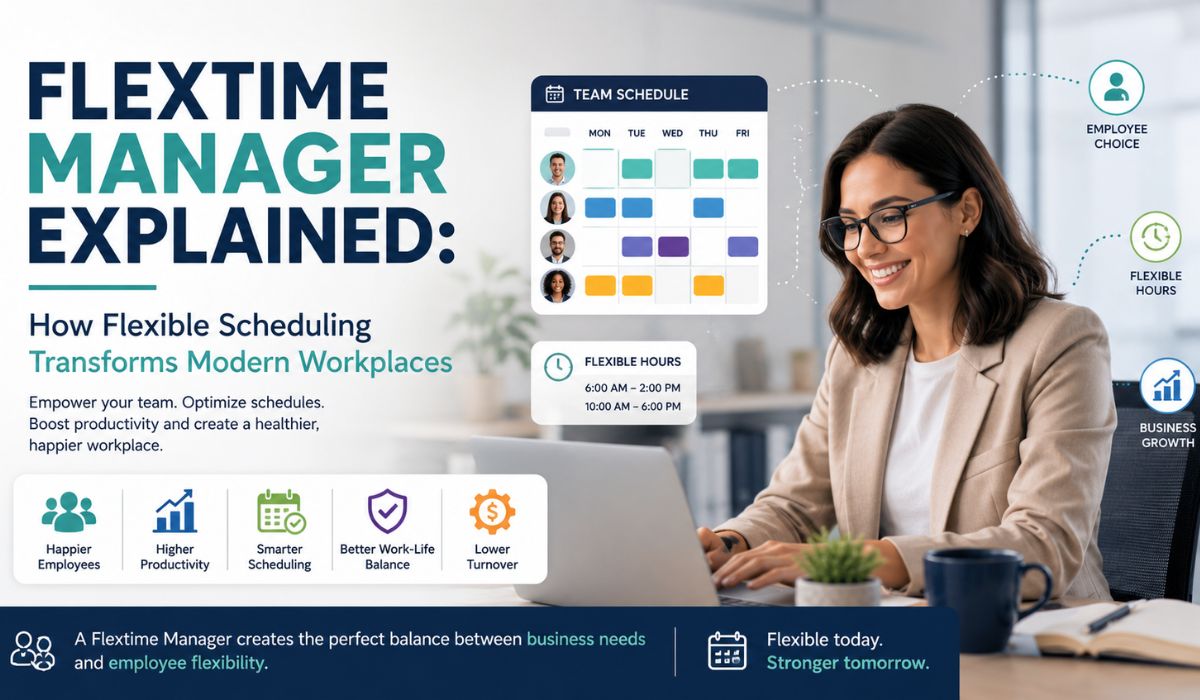
Introduction: Why Flextime Manager Matters In Modern Workplaces
Modern workplaces are changing faster than ever before, and one of the biggest shifts is the move toward flexible working hours. Instead of strict 9-to-5 routines, many companies now use flexible schedules that adapt to employees’ needs and business demands. This is where the concept of a Flextime Manager becomes important. A Flextime Manager helps organizations balance employee freedom with operational efficiency by managing schedules in a structured but flexible way. In 2026, this approach is no longer just a workplace benefit but a core part of workforce strategy across industries like retail, healthcare, technology, and customer service.
What Is A Flextime Manager
A Flextime Manager is a system, role, or process responsible for organizing flexible work schedules within a company. Instead of assigning fixed shifts to employees, a Flextime Manager allows variation in working hours while still ensuring that business operations are fully covered. In some organizations, this is a dedicated HR or operations role, while in others it is handled through scheduling software that automates most of the process. The main idea is to create a balance where employees can choose more flexible hours without affecting productivity or workflow stability.
The Growing Need For Flextime Manager Systems
The rise of hybrid work, remote teams, and global workforces has made traditional scheduling less effective. Employees now expect more control over their time, and businesses need to respond to this expectation to stay competitive. A Flextime Manager system helps companies manage this shift by creating structured flexibility. It ensures that while employees enjoy autonomy, the organization still meets its operational goals. This need is especially strong in industries where demand changes throughout the day or week, such as hospitality, retail, and logistics.
Core Role Of Flextime Manager In Workplaces
The Flextime Manager plays a central role in ensuring that flexible scheduling does not lead to confusion or staffing gaps. It acts as the bridge between employee preferences and business requirements. By coordinating availability, workload, and shift coverage, it ensures that every department runs smoothly. This role is also important in maintaining fairness, as it prevents scheduling bias and ensures equal access to flexible opportunities for all employees.
Responsibilities Of Flextime Manager
The responsibilities of a Flextime Manager are both operational and strategic. It includes designing work schedules that reflect employee availability while ensuring core business hours are covered. It also involves managing shift swaps, tracking attendance patterns, and adjusting schedules in real time when unexpected changes occur. Another important responsibility is setting core working hours where all employees must be available, especially in hybrid environments. Compliance with labor laws and company policies is also a major part of this role, ensuring that flexibility does not lead to legal issues.
Why Flextime Manager Improves Work Life Balance
One of the strongest advantages of Flextime Manager systems is the improvement in work life balance. Employees gain the ability to align work schedules with personal responsibilities, which reduces stress and burnout. This flexibility allows individuals to manage family needs, education, health, and personal interests more effectively. When employees feel that their time is respected, they become more motivated and engaged in their work. This creates a healthier and more productive workplace environment.
Business Benefits Of Flextime Manager Systems
From a business perspective, Flextime Manager systems provide several advantages. Companies experience lower employee turnover because workers are more satisfied with flexible arrangements. Productivity often increases because employees work during their most effective hours. Businesses also benefit from better staffing efficiency, as flexible schedules allow them to match workforce availability with demand peaks. Over time, this leads to reduced hiring costs, improved performance, and stronger organizational stability.
Challenges In Flextime Management
Although Flextime Manager systems offer many benefits, they also come with challenges. Managing complex schedules for multiple employees can become difficult without proper tools. Communication gaps may occur if updates are not shared in real time. There is also a risk of understaffing during busy periods if scheduling is not carefully monitored. Additionally, companies must ensure compliance with local labor laws, which can vary by region and industry. These challenges highlight the importance of proper planning and technology support.
How Flextime Manager Works In Practice
In real workplace settings, Flextime Manager systems usually start with defining core working hours. These are the hours when all employees or specific teams must be available. Outside of these hours, employees may choose flexible start and end times. Many organizations also allow self-scheduling, where employees pick shifts based on availability. Managers then review and approve schedules to ensure coverage is balanced. Real-time adjustments are made when employees are absent or when demand suddenly increases, making the system dynamic and responsive.
Technology Behind Flextime Manager Systems
Modern Flextime Manager systems heavily rely on technology to function efficiently. Scheduling software automates shift creation, reduces manual errors, and improves accuracy. Time tracking tools help monitor attendance and ensure payroll accuracy. Communication platforms allow instant updates when schedules change. Advanced systems even use artificial intelligence to predict staffing needs based on historical data. These technologies transform scheduling from a manual task into an intelligent workforce management system.
Implementation Strategy For Flextime Manager
Implementing a Flextime Manager system requires careful planning. Companies usually begin by creating a clear flextime policy that outlines rules, eligibility, and expectations. Managers and supervisors are then trained to handle flexible scheduling effectively. Organizations often introduce scheduling tools to automate shift assignments and improve communication. After implementation, continuous monitoring is essential to identify gaps and improve performance. Feedback from employees plays a key role in refining the system over time.
Measuring Success Of Flextime Manager
To determine whether a Flextime Manager system is working effectively, companies track several performance indicators. Employee satisfaction surveys provide insight into how workers feel about flexibility. Turnover rates help measure retention improvements. Attendance and punctuality data show how well employees are managing their schedules. Productivity levels indicate whether flexibility is improving output. When combined, these metrics provide a clear picture of the system’s effectiveness and long-term impact.
Future Of Flextime Manager In 2026 And Beyond
The future of Flextime Manager systems is closely connected to automation and artificial intelligence. As workplaces become more digital and distributed, scheduling will become increasingly data-driven. AI tools will predict workforce demand more accurately, while employees will gain even more control over their schedules. Remote work will continue to expand, making flexible scheduling a standard rather than an option. This evolution will make Flextime Manager systems even more essential for modern organizations.
Final Thoughts
Flextime Manager systems represent a major shift in how modern workplaces operate. They combine flexibility with structure, allowing businesses to stay efficient while giving employees more control over their time. As technology continues to evolve, flexible scheduling will become even more intelligent and automated. Companies that adopt these systems early will likely see stronger performance, happier employees, and a more adaptive workplace culture in the years ahead.
FAQs About Flextime Manager
What Is A Flextime Manager
A Flextime Manager is a system or role that helps organizations manage flexible employee schedules while ensuring business operations are fully covered. It balances employee freedom with operational needs through structured scheduling rules.
How Does Flextime Manager Improve Productivity
It improves productivity by allowing employees to work during their most effective hours. This reduces stress, increases focus, and leads to better overall performance across teams.
Is Flextime Manager Suitable For All Businesses
Not all businesses can fully adopt flextime systems. It works best in industries where tasks are not strictly time bound, although even structured workplaces can use partial flexibility.
What Tools Support Flextime Manager Systems
Scheduling software, time tracking tools, communication platforms, and AI based workforce systems are commonly used to manage flexible scheduling efficiently.
Can Flextime Manager Reduce Employee Turnover
Yes, flexible scheduling improves employee satisfaction, which leads to lower turnover rates and stronger employee retention over time.
What Are Core Hours In Flextime Management
Core hours are fixed time periods when all employees must be available, even in flexible scheduling systems. They ensure coordination and team collaboration.
Is Flextime Management Legal
Yes, but it must comply with local labor laws regarding working hours, overtime, breaks, and scheduling requirements, which vary by country and region.
Recommended For You: Fappelo Explained: Features, Benefits, and What Makes It Unique