
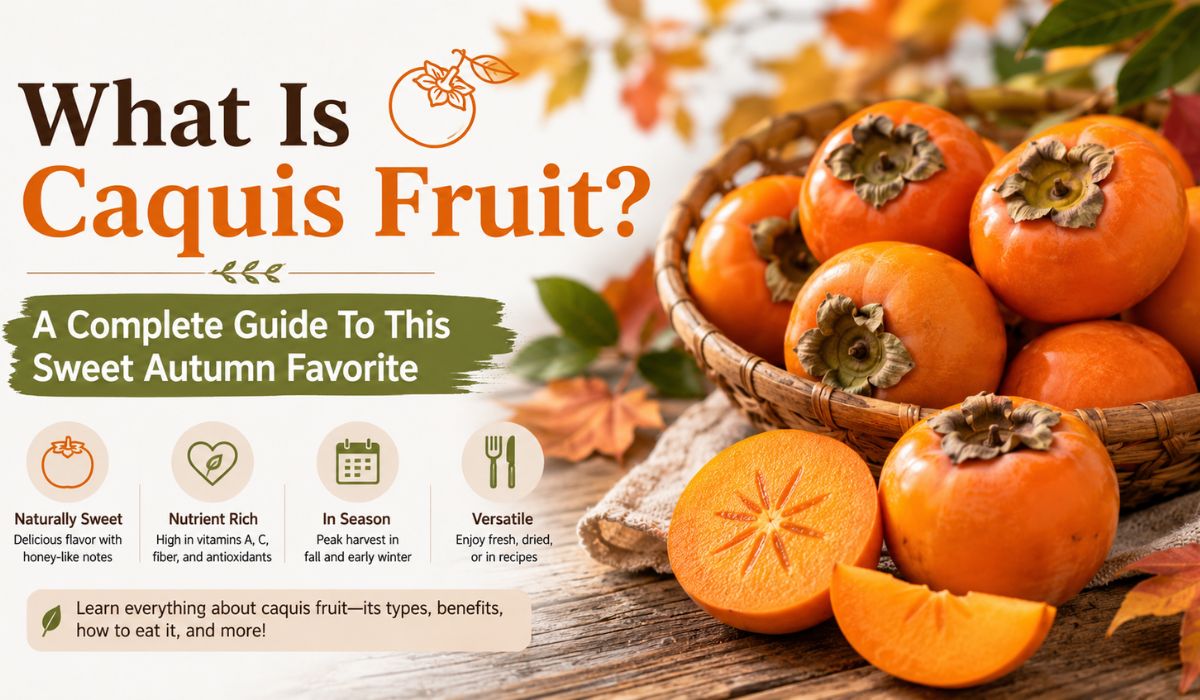
Caquis Fruit, often known simply as Persimmon, is a vibrant orange seasonal fruit that has become increasingly popular around the world for its natural sweetness, smooth texture, and nutritional richness. In 2026, it continues to gain attention as more people look for healthy, natural foods that fit into modern diets. Originating from East Asia and now widely cultivated in countries like Spain, Caquis Fruit is especially loved for its unique ability to be eaten firm while still delivering a honey-like sweetness. This guide explores everything about Caquis Fruit, from its origin and varieties to its health benefits, uses, and growing global demand.
What Is Caquis Fruit?
Caquis Fruit is a type of Persimmon scientifically known as Diospyros Kaki. It is a seasonal fruit that belongs to the Ebenaceae family and is widely recognized for its bright orange color and naturally sweet flavor. Unlike many traditional persimmons that require full ripening before eating, Caquis Fruit is often enjoyed while still firm. This makes it more convenient and appealing to modern consumers who prefer ready-to-eat fruits with minimal preparation.
Origins And History Of Caquis Fruit
The history of Caquis Fruit begins in East Asia, particularly in China, Japan, and Korea, where it has been cultivated for centuries. Ancient agricultural records show that persimmons were valued not only as food but also as symbols of good fortune and longevity. Over time, the fruit spread to Europe and the Mediterranean region, where it adapted well to warmer climates. Spain, in particular, became one of the leading producers, refining cultivation techniques to produce high-quality Caquis Fruit for international markets.
Major Growing Regions Of Caquis Fruit
Today, Caquis Fruit is grown in several parts of the world, but Spain remains one of the most important producers. The Ribera Del Xúquer region in Valencia is especially famous due to its ideal climate, fertile soil, and advanced agricultural systems. This region benefits from a protected designation that ensures strict quality control and authenticity. Outside Spain, Caquis Fruit is also cultivated in Italy, Israel, China, and Brazil, but Spanish varieties are often considered premium due to consistent sweetness and texture.
What Makes Caquis Fruit Unique
One of the most distinctive features of Caquis Fruit is its non-astringent nature. Many persimmons create a dry, bitter sensation if eaten too early, but Caquis Fruit undergoes a natural treatment process that removes this effect. As a result, it can be eaten while still firm, similar to an apple, without any unpleasant taste. This unique characteristic has made it one of the most consumer-friendly exotic fruits in global markets.
Popular Varieties Of Caquis Fruit
Among the many types of persimmons, the Rojo Brillante variety is the most widely associated with Caquis Fruit production. It is known for its large size, deep orange-red color, and high sugar content. This variety is carefully harvested and treated to maintain firmness while enhancing sweetness. Other varieties exist globally, such as Fuyu and Hachiya, but Rojo Brillante remains the most commercially significant for export markets.
Taste And Texture Experience
The flavor of Caquis Fruit is often described as a blend of honey, melon, and mild tropical sweetness. When firm, it has a crisp bite similar to a fresh apple, making it refreshing and light. As it ripens, the texture softens into a creamy, pudding-like consistency that enhances its natural sweetness. This dual texture experience makes Caquis Fruit versatile and enjoyable in different stages of ripeness.
Nutritional Value Of Caquis Fruit
Caquis Fruit is highly nutritious and offers a wide range of essential vitamins and minerals. It is rich in vitamin A, which supports eye health and immune function, and vitamin C, which contributes to skin health and immunity. It also contains dietary fiber, which helps regulate digestion and promotes fullness. In addition, Caquis Fruit provides antioxidants such as beta-carotene and flavonoids that help protect the body from oxidative stress.
Health Benefits Of Caquis Fruit
Regular consumption of Caquis Fruit may support overall wellness in several ways. Its antioxidants help reduce inflammation and support heart health by protecting blood vessels. The fiber content promotes healthy digestion and may assist in weight management by increasing satiety. Vitamin A supports vision health, while vitamin C strengthens the immune system. These combined benefits make Caquis Fruit a valuable addition to a balanced diet.
How To Eat Caquis Fruit
Caquis Fruit can be enjoyed in many simple and creative ways. It is commonly eaten fresh, either whole or sliced, and its skin is edible. It can also be added to smoothies for natural sweetness or blended into juices for a refreshing drink. In the kitchen, Caquis Fruit is used in desserts such as cakes, puddings, and breads, and it also pairs well with savory dishes like salads, cheeses, and roasted meats, adding a unique sweet contrast.
Storage And Ripening Of Caquis Fruit
Proper storage plays an important role in maintaining the quality of Caquis Fruit. If the fruit is still firm, it should be kept at room temperature until it reaches the desired ripeness. Once ripe, refrigeration helps extend its freshness for several days. It is important to handle Caquis Fruit gently because its skin is soft and can bruise easily. Proper storage ensures that its flavor, texture, and nutritional value remain intact.
Seasonal Availability And Market Demand
Caquis Fruit is primarily a seasonal fruit harvested between October and January, making it a popular choice during autumn and early winter. Its bright color and sweet taste align perfectly with seasonal eating trends. In recent years, global demand has increased significantly due to growing awareness of healthy eating and natural superfoods. Supermarkets across Europe, Asia, and the Middle East now regularly stock Caquis Fruit during peak season.
Sustainability And Modern Farming Practices
Modern Caquis Fruit farming has increasingly focused on sustainability and environmental responsibility. Many farms use efficient irrigation systems to reduce water usage and implement integrated pest management to minimize chemical inputs. These practices help preserve soil health and reduce environmental impact. Seasonal harvesting also reduces the need for artificial preservation methods, making Caquis Fruit a more eco-friendly agricultural product.
Global Popularity Of Caquis Fruit
Caquis Fruit has transformed from a regional fruit into a globally recognized product. Its visual appeal, easy consumption, and health benefits make it attractive to modern consumers. It is especially popular among health-conscious individuals who prefer natural sugar sources over processed snacks. As global trade expands, Caquis Fruit continues to grow in popularity across new markets, establishing itself as a premium seasonal fruit.
Culinary Creativity With Caquis Fruit
In modern cuisine, Caquis Fruit is being used in increasingly creative ways. Chefs and home cooks incorporate it into gourmet salads, yogurt bowls, desserts, and even savory sauces. Its natural sweetness allows for reduced added sugar in recipes, making it a healthier alternative in baking. The fruit’s smooth texture when ripe also makes it ideal for purees and spreads, adding versatility to everyday cooking.
Future Outlook Of Caquis Fruit In 2026 And Beyond
Looking ahead, Caquis Fruit is expected to continue gaining popularity as consumers prioritize healthy, natural, and sustainable foods. Advances in farming technology and global distribution will likely make it more accessible in non-traditional markets. With its strong nutritional profile and consumer-friendly characteristics, Caquis Fruit is positioned to remain a strong competitor in the global fruit industry.
FAQs About Caquis Fruit
What Is Caquis Fruit?
Caquis Fruit Is A Type Of Persimmon Known For Its Sweet Flavor And Ability To Be Eaten While Firm Without Bitterness.
Is Caquis Fruit Healthy To Eat Daily?
Yes, Caquis Fruit Can Be Eaten Daily In Moderation As It Provides Vitamins Fiber And Antioxidants That Support Overall Health.
Can You Eat The Skin Of Caquis Fruit?
Yes The Skin Is Edible And Contains Nutrients Although Some People Prefer To Peel It Based On Texture Preference.
When Is Caquis Fruit In Season?
Caquis Fruit Is Typically In Season From October To January During Autumn And Early Winter.
What Does Caquis Fruit Taste Like?
It Has A Sweet Honey Like Flavor With Hints Of Melon And A Soft Or Crisp Texture Depending On Ripeness.
Where Is Caquis Fruit Mainly Grown?
It Is Mainly Grown In East Asia And Spain Especially In The Ribera Del Xúquer Region.
Can Children Eat Caquis Fruit?
Yes It Is Suitable For Children Due To Its Natural Sweetness And Soft Texture When Ripe.
Final Thoughts
Caquis Fruit Stands Out As One Of The Most Enjoyable And Nutritious Seasonal Fruits Available Today. Its unique combination of sweetness, convenience, and health benefits makes it a favorite among consumers worldwide. From its ancient origins in East Asia to its modern cultivation in Spain, Caquis Fruit represents both tradition and innovation in agriculture. As global demand continues to grow, it is clear that this vibrant orange fruit will remain an important part of healthy diets and seasonal eating habits for years to come.
Recommended For You: What Is Milyom? Exploring The Viral Internet Mystery Capturing Attention