
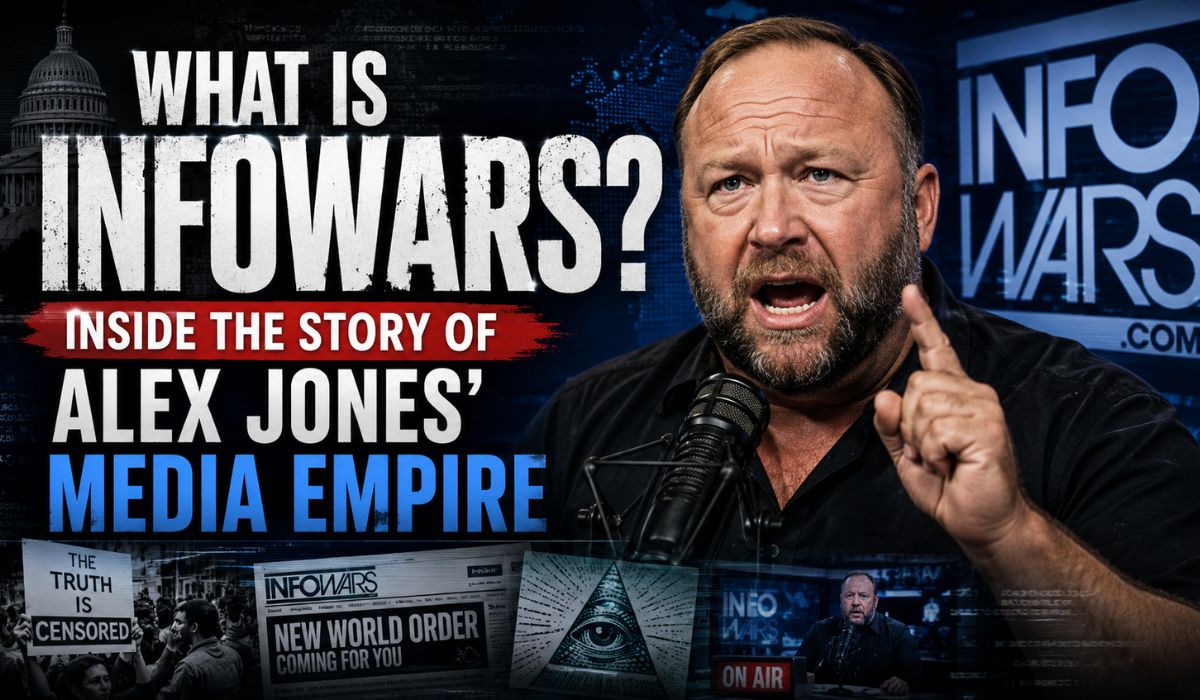
Infowars is one of the most controversial media platforms in modern internet history. Created by Alex Jones in 1999, it grew from a small conspiracy-focused broadcast project into a global online presence that attracted millions of viewers at its peak. Over time, Infowars became widely known for promoting conspiracy theories, challenging mainstream journalism, and becoming deeply involved in debates about misinformation and online responsibility. Its story includes rapid growth, major legal battles, platform bans, financial collapse, and ultimately its shutdown in 2026. Understanding Infowars is important for anyone studying modern media, internet culture, and the rise of alternative news ecosystems.
What Is Infowars
Infowars is an American media website and broadcast platform that became known for publishing political commentary, conspiracy theories, and opinion-driven content. It operated as part of Free Speech Systems LLC and was primarily associated with Alex Jones. The platform blended talk shows, video segments, and written content, often presenting itself as an alternative to mainstream news. However, it became heavily criticized for spreading false information and promoting narratives that were not supported by credible evidence.
The Origin Of Infowars In 1999
Infowars began in Austin, Texas, where Alex Jones launched it as a small-scale media project. At first, it focused on mail-order video distribution and public-access television broadcasts. The early content centered on government skepticism and conspiracy-based interpretations of global events. Over time, the project evolved into a dedicated online platform, allowing it to reach a much larger audience through the internet. This shift marked the beginning of its transformation into a major digital media brand.
Alex Jones And The Identity Of Infowars
Alex Jones is central to the identity of Infowars. His energetic broadcasting style, emotional commentary, and strong anti-establishment views shaped the tone of the platform. Jones positioned himself as a truth-seeker challenging powerful institutions, which helped him build a loyal audience. However, his claims often included unverified or false information, leading to widespread criticism. His personality became inseparable from Infowars, making the platform as much about him as the content itself.
The Growth Of Infowars In The 2010s
During the 2010s, Infowars experienced rapid growth, especially around major political events in the United States. The platform gained significant attention during the 2016 presidential election, when its content was widely shared across social media. At its peak, Infowars reportedly attracted millions of monthly visitors. It also expanded its team with political commentators and media personalities, increasing its visibility in online political discussions. This period marked the height of its influence in digital media.
Content Style And Conspiracy Narratives
Infowars became widely known for promoting conspiracy theories and controversial claims. These included narratives about government secret operations, global elites, vaccine skepticism, and major public events being staged or manipulated. The platform often framed its content as investigative reporting, but many claims were later debunked by fact-checkers and journalists. This content style attracted both strong supporters and intense criticism, making Infowars one of the most debated websites online.
Public Backlash And Growing Controversies
As Infowars expanded, so did criticism of its content. Media organizations, researchers, and advocacy groups accused it of spreading misinformation and contributing to public confusion on important issues. Some of its narratives were linked to harassment campaigns against individuals and institutions mentioned in its broadcasts. Over time, Infowars became a symbol of the broader challenge of managing misinformation in the digital age, especially on social media platforms.
The Sandy Hook Defamation Case
One of the most significant turning points in Infowars’ history was the Sandy Hook defamation lawsuits. Families of victims of the 2012 school shooting sued Alex Jones after he repeatedly claimed the tragedy was staged. Courts later ruled against him, leading to massive financial penalties exceeding one billion dollars in damages. These legal cases became a landmark moment in media law, showing that spreading harmful false claims could result in serious legal consequences.
Platform Bans And Digital Restrictions
Infowars and Alex Jones faced widespread bans from major technology platforms. YouTube, Facebook, Apple, Spotify, Twitter, and other services removed Infowars content due to violations of policies related to misinformation, hate speech, and harassment. These actions significantly reduced the platform’s reach and forced it to rely more heavily on its own website and direct audience engagement. The bans also sparked debates about free speech and platform responsibility online.
The Business Model Behind Infowars
Beyond media content, Infowars developed a strong commercial business model. A large portion of its revenue came from selling dietary supplements, survival products, branded merchandise, and related wellness items. The platform also hosted donation drives and fundraising events to support its operations. This commercial side became essential to its survival, especially after advertising restrictions and platform bans limited its online visibility.
Bankruptcy And Financial Collapse
The financial downfall of Infowars began after years of legal pressure and declining platform access. In 2022, the company behind Infowars filed for bankruptcy protection. The legal judgments from defamation cases, especially the Sandy Hook lawsuits, created overwhelming financial liabilities. Courts later ordered asset liquidation to help pay damages. This marked the beginning of the end for the platform as a functioning media company.
Attempts To Acquire And Rebrand Infowars
During bankruptcy proceedings, multiple attempts were made to purchase or rebrand Infowars. One notable effort came from a satirical media group that proposed turning the platform into a parody-based website. These attempts led to legal disputes over ownership rights and auction procedures. Although interest existed in repurposing the brand, court decisions and financial complications prevented a smooth transition.
The Shutdown Of Infowars In 2026
By 2026, Infowars was no longer financially or legally stable. Court decisions, unpaid operational costs, and ongoing disputes led to the shutdown of its broadcasting operations. In April 2026, the website went offline and displayed an “Off Air” message. This event marked the end of more than two decades of continuous operation and closed a major chapter in internet media history.
The Impact Of Infowars On Media And Internet Culture
Infowars had a lasting impact on online media, especially in how people discuss misinformation, trust, and digital news consumption. Supporters viewed it as an alternative voice challenging mainstream narratives, while critics saw it as a major source of false information. Regardless of perspective, its influence shaped debates about content moderation, free speech, and the responsibilities of online platforms in controlling harmful narratives.
Final Thoughts On The Infowars Legacy
The story of Infowars reflects the rise and fall of a highly controversial digital media empire. From its early beginnings in 1999 to its peak influence in the 2010s and eventual collapse in 2026, it played a major role in shaping discussions around misinformation and online media ethics. Its legacy continues to be debated, serving as a case study in how powerful internet platforms can grow rapidly, influence public opinion, and eventually face consequences for spreading disputed or harmful content.
Frequently Asked Questions About Infowars
What Is Infowars Known For
Infowars is best known for its conspiracy-focused content, political commentary, and controversial claims shared through its website and broadcasts. It gained global attention due to its influence and legal controversies.
Who Created Infowars
Infowars was created by Alex Jones in 1999 in Austin, Texas. He remains the most recognized figure associated with the platform throughout its history.
Why Was Infowars Controversial
Infowars became controversial due to repeated accusations of spreading misinformation, promoting conspiracy theories, and making claims that were later proven false or misleading.
What Happened In The Sandy Hook Case
Families of Sandy Hook victims sued Alex Jones for defamation after he falsely claimed the shooting was staged. Courts ruled against him, awarding significant damages.
Why Was Infowars Removed From Social Media
Major platforms removed Infowars for violating rules against misinformation, hate speech, and harassment, significantly limiting its online reach.
How Did Infowars Make Money
Infowars primarily earned revenue through dietary supplements, merchandise sales, survival products, and fundraising campaigns.
Is Infowars Still Active Today
No, Infowars was shut down in 2026 after legal and financial issues led to the end of its operations and website shutdown.
What Is The Legacy Of Infowars
Infowars remains a major example in discussions about misinformation, digital media influence, and the responsibilities of online platforms.
Recommended For You: nHentai Explained: History, Features, And How The Platform Works