
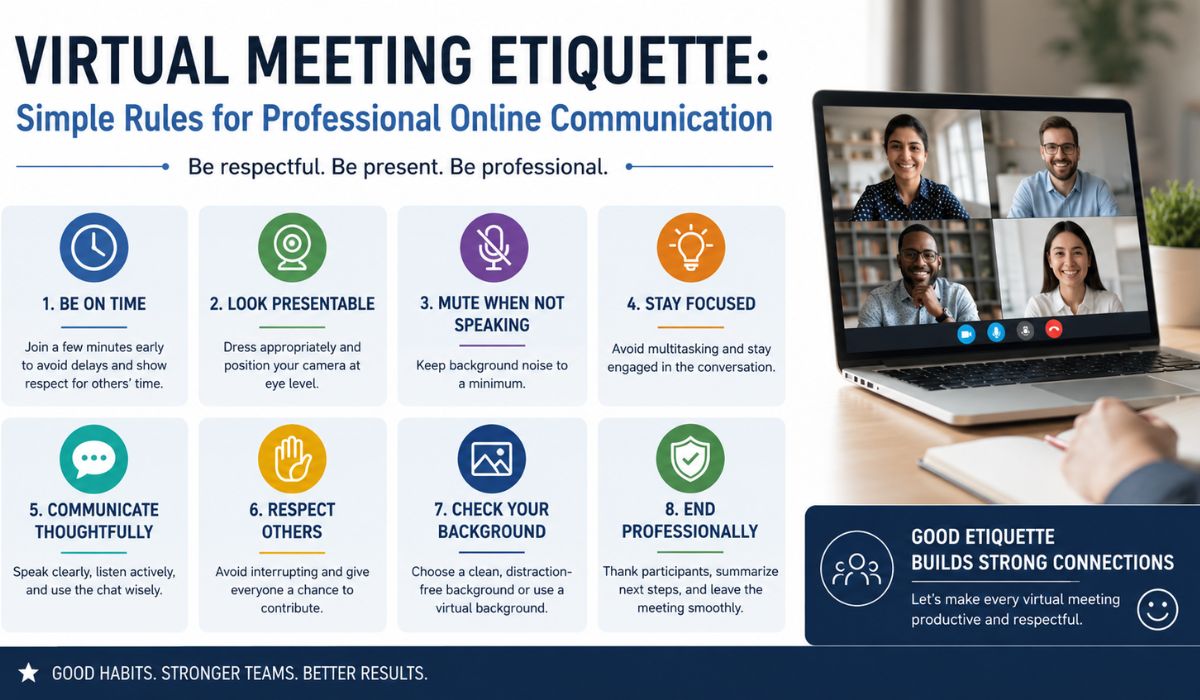
Introduction: Why Virtual Meeting Etiquette Matters In Modern Workplaces
Virtual Meeting Etiquette has become a core skill in today’s digital workplace, especially as remote work, hybrid teams, and global collaboration continue to grow in 2026. Online meetings are now the main space where decisions are made, ideas are shared, and teams stay connected across time zones. However, without proper etiquette, these meetings can quickly become disorganized, distracting, and unproductive.
Virtual Meeting Etiquette is not just about being polite on camera. It includes how you prepare, how you communicate, how you use technology, and how organizations structure meetings to improve results. When done correctly, it improves focus, builds trust, and ensures every meeting leads to clear outcomes instead of confusion or wasted time.
Understanding Virtual Meeting Etiquette In Simple Terms
Virtual Meeting Etiquette refers to the set of behaviors, communication practices, and technical habits that help online meetings run smoothly and professionally. It includes both individual responsibility and team-level standards. In simple words, it is how people should behave and interact in online meetings to make communication clear and respectful.
Unlike in-person meetings, virtual environments rely heavily on cameras, microphones, and digital tools. This makes etiquette even more important because small mistakes like background noise or speaking over others can significantly affect the entire meeting experience.
Preparing Before A Virtual Meeting For Better Results
Good Virtual Meeting Etiquette starts before the meeting even begins. Preparation helps reduce confusion and technical issues that often disrupt discussions. Testing your microphone, camera, and internet connection ensures that you are ready to participate without interruptions.
A well-prepared participant also reviews the agenda and any shared documents beforehand. This allows you to understand the purpose of the meeting and contribute meaningfully. Joining a few minutes early is another simple habit that creates a professional impression and helps avoid delays.
Professional Appearance And Meeting Environment Setup
Your appearance and surroundings play a major role in how others perceive you during a virtual meeting. Virtual Meeting Etiquette encourages participants to present themselves in a clean and professional way that matches the meeting context.
A quiet and well-lit space helps improve communication quality. Natural lighting facing your camera often creates the best results. A clean background or a simple virtual background can also reduce distractions and help maintain focus on the conversation. Dressing appropriately based on the meeting type shows respect for others and strengthens professionalism.
Communication Basics For Virtual Meetings
Strong communication is the foundation of effective Virtual Meeting Etiquette. Speaking clearly, avoiding interruptions, and staying mindful of tone are all essential parts of professional online communication.
Muting your microphone when not speaking is one of the simplest yet most important rules. It prevents background noise from disrupting the conversation. When speaking, it is important to stay clear and structured so others can easily follow your thoughts. Listening carefully is just as important as speaking because virtual meetings require more intentional attention compared to face-to-face discussions.
Camera Etiquette And Visual Engagement
Camera usage is a key part of Virtual Meeting Etiquette, especially in remote teams. Keeping the camera on helps build trust and improves engagement because people can see facial expressions and reactions.
However, camera use should be flexible depending on context. In long meetings or low-bandwidth situations, turning the camera off may help reduce fatigue and improve performance. When the camera is on, maintaining eye contact by looking at the lens instead of the screen creates a more natural and engaging presence.
Staying Focused And Avoiding Multitasking
One of the biggest challenges in Virtual Meeting Etiquette is staying fully focused. Many people unintentionally multitask during meetings by checking emails or browsing other tabs. This reduces engagement and often leads to missed information.
Staying focused means treating virtual meetings with the same attention as in-person meetings. Closing unnecessary applications, silencing notifications, and actively participating in the discussion helps improve both personal performance and team outcomes.
Using Chat And Digital Tools Effectively
Modern meeting platforms provide several tools that improve communication when used correctly. Virtual Meeting Etiquette includes knowing when and how to use features like chat, reactions, and hand-raising.
The chat feature is useful for sharing links, asking short questions, or adding supporting comments without interrupting the speaker. Hand-raising tools help maintain order in larger meetings, while reactions allow participants to show engagement without breaking the flow of conversation. These tools make virtual communication smoother and more structured when used properly.
Role Of Meeting Hosts And Organizers
Virtual Meeting Etiquette is not only for participants but also for hosts and organizers. A well-organized meeting begins with a clear agenda that defines the purpose and expected outcomes.
Hosts are responsible for managing time, guiding discussions, and ensuring that all participants have a chance to contribute. A structured meeting flow helps avoid confusion and keeps conversations focused on important topics. Good leadership in virtual meetings directly improves productivity and reduces wasted time.
Common Mistakes In Virtual Meetings
Many issues in online meetings come from simple mistakes that can be easily avoided. Poor Virtual Meeting Etiquette often includes joining late, speaking without preparation, or forgetting to mute the microphone.
Interrupting others or talking over participants is another common problem that disrupts communication flow. Sharing the entire screen instead of a specific window can also accidentally expose private information. Being aware of these mistakes helps improve professionalism and meeting quality.
Screen Sharing And Security Awareness
Screen sharing is an important part of virtual collaboration, but it also comes with security risks. Virtual Meeting Etiquette encourages safe screen sharing practices to protect sensitive information.
Sharing only specific application windows instead of the full screen helps prevent accidental exposure of private data. It is also important to turn off notifications during presentations and close unnecessary applications. These small habits significantly reduce the risk of information leaks during meetings.
Virtual Meeting Etiquette For Global Teams
In global and remote teams, Virtual Meeting Etiquette must consider cultural differences and time zones. Scheduling meetings fairly across different regions ensures that no team member is consistently disadvantaged by inconvenient timing.
Clear communication becomes even more important when working across languages and cultures. Using simple language, avoiding complex expressions, and sharing agendas in advance helps improve understanding and participation across diverse teams.
Building Better Meeting Habits For Long Term Success
Virtual Meeting Etiquette is not just about individual meetings but about building long-term habits that improve workplace communication. When teams consistently follow good practices, meetings become shorter, clearer, and more productive over time.
Organizations that promote structured communication, clear agendas, and proper documentation see better collaboration and stronger decision-making. Over time, these habits create a culture of respect, focus, and efficiency in virtual environments.
FAQs About Virtual Meeting Etiquette
What Is Virtual Meeting Etiquette
Virtual Meeting Etiquette is a set of professional behaviors and communication rules that help make online meetings more organized, respectful, and productive. It includes preparation, communication habits, and proper use of digital tools.
Why Is Virtual Meeting Etiquette Important
Virtual Meeting Etiquette is important because it improves communication clarity, reduces distractions, and helps teams make better decisions during online meetings.
How Can I Improve My Virtual Meeting Etiquette
You can improve by preparing in advance, muting your microphone when not speaking, staying focused, and participating actively using chat and reaction tools when appropriate.
What Are Common Virtual Meeting Mistakes
Common mistakes include joining late, multitasking, interrupting others, and failing to prepare for the meeting agenda or technical setup.
Should Camera Always Be On During Virtual Meetings
Camera usage depends on context. Keeping it on improves engagement, but turning it off can help reduce fatigue in long or low-bandwidth meetings.
How Do You Stay Focused In Virtual Meetings
You stay focused by avoiding multitasking, closing unnecessary applications, turning off notifications, and actively participating in discussions.
What Is The Role Of A Meeting Host
A meeting host sets the agenda, manages time, guides discussion, and ensures all participants are engaged and the meeting stays productive.
Recommended For You: What Is Infowars? Inside The Story Of Alex Jones’ Media Empire