
The phrase Ponas Robotas has started appearing more often in online discussions about technology, artificial intelligence, and modern robotics. At first glance, it may look like a niche linguistic expression, but it actually sits at the intersection of language, culture, and advanced technology. As AI systems become more common in everyday life, people are increasingly drawn to words that humanize machines, and Ponas Robotas is one of those expressions that captures this shift in a simple but powerful way.
This article explores Ponas Robotas in depth, including its meaning, origin, cultural background, connection to the Mr Robot TV series, and its relevance in today’s rapidly evolving world of intelligent robotics. It also explains how the concept reflects broader changes in how humans interact with artificial intelligence and what the future may look like as machines become more capable and more integrated into daily life.
What Does Ponas Robotas Mean
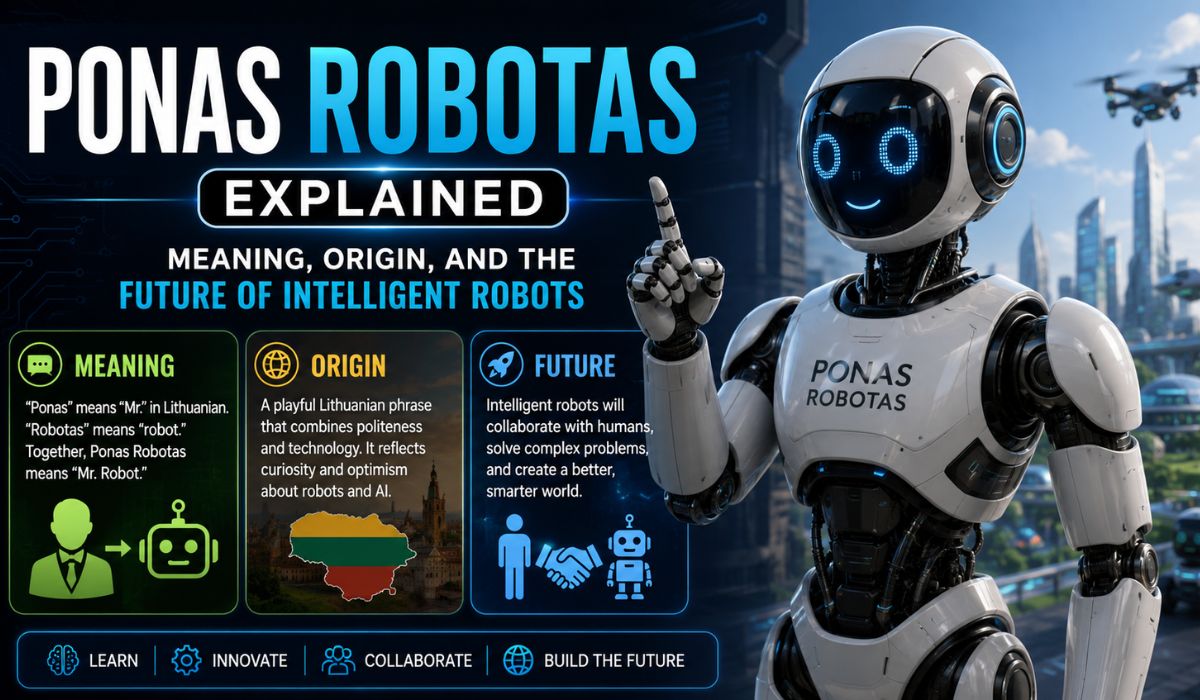
Ponas Robotas is a Lithuanian phrase that translates directly to Mr Robot in English. The word Ponas means Mr, Sir, or Gentleman, while Robotas means Robot. When combined, the phrase creates a respectful and human-like title for a machine, almost as if the robot is being treated as a person rather than a tool.
This small linguistic structure reflects a much larger cultural idea. As technology becomes more advanced, people naturally begin to assign human characteristics to machines that can think, respond, and interact. Ponas Robotas therefore represents not just a translation but also a symbolic shift in how society views artificial intelligence, from mechanical tools to intelligent assistants that feel more relatable and approachable.
Linguistic Origin Of Robotas
The word Robotas in Lithuanian comes from the global term robot, which has been widely adopted across many languages. Like most European languages, Lithuanian adapted the word to fit its own linguistic system, forming Robotas to describe mechanical or automated machines.
This adaptation shows how technological vocabulary spreads globally. As robotics developed over the decades, different cultures shaped the word slightly, but the core meaning remained the same. Today, Robotas in Lithuanian is used in both technical contexts and everyday language, reflecting how deeply robotics has become part of modern life.
Historical Origin Of The Word Robot
The origin of the word robot dates back to the early twentieth century. It was first introduced by Czech writer Karel Čapek in his 1920 play R U R Rossum’s Universal Robots. In the play, robots were artificial workers created to serve humans, representing early fears and hopes about industrial automation.
Interestingly, the word robot comes from a Slavic root meaning forced labor or servitude. Over time, this fictional concept evolved into a real technological field. What was once science fiction has now become a major part of modern engineering, artificial intelligence, and automation industries.
Ponas Robotas In Pop Culture And Mr Robot Connection
One of the reasons Ponas Robotas became more recognizable is its connection to the television series Mr Robot. In Lithuanian translations, the show is referred to as Ponas Robotas, which helped introduce the phrase to a wider audience.
The series itself focuses on cybersecurity, hacking culture, corporate control, and mental health. Its storytelling resonated with viewers because it reflects real concerns about digital surveillance and technology dependence. As a result, the phrase Ponas Robotas became more than just a translation. It became associated with themes of technology, control, and digital identity.
This cultural link helped the phrase gain symbolic meaning beyond language, especially in discussions about modern digital systems and AI ethics.
Why Ponas Robotas Is Gaining Attention Today
In recent years, Ponas Robotas has started appearing in discussions about artificial intelligence, smart assistants, and robotics innovation. This rise in attention is connected to the global boom in AI technologies, including conversational AI, automation tools, and intelligent machines.
As people interact more with AI systems, they naturally search for ways to describe them. Terms like Ponas Robotas become useful because they humanize technology and make it easier to understand. Instead of thinking about machines as cold systems, people begin to imagine them as polite and helpful assistants that work alongside humans.
Evolution Of Intelligent Robots
The development of intelligent robots has moved through several important stages. Early robots were simple machines designed to perform repetitive industrial tasks. These machines followed fixed instructions and had no ability to adapt or learn.
Modern robots, however, are very different. They use artificial intelligence and machine learning to analyze data, understand environments, and improve performance over time. This shift has transformed robotics from simple automation into intelligent systems capable of decision making and adaptation.
Today’s robots are not only faster and more accurate but also more flexible and capable of working in unpredictable environments.
Key Technologies Behind Modern Robotics
Intelligent robots rely on several advanced technologies that work together to create smart behavior. Sensors allow robots to detect and understand their surroundings, while cameras provide visual information similar to human sight.
Artificial intelligence enables robots to process this information and make decisions based on patterns and learned behavior. Machine learning allows these systems to improve continuously as they gather more data. Cloud computing supports large scale processing, enabling robots to access powerful computing resources remotely.
Together, these technologies create machines that are no longer just programmed tools but adaptive systems capable of learning and evolving.
Real World Uses Of Intelligent Robots
Intelligent robotics is already widely used in everyday life. In homes, robot vacuum cleaners map rooms and clean floors automatically, while smart assistants help manage schedules and control connected devices.
In healthcare, robots assist doctors and nurses by delivering supplies, monitoring patients, and supporting surgical procedures. In industrial environments, robotic systems manage logistics, assemble products, and reduce human workload in repetitive tasks.
Customer service is another growing area where AI powered systems handle inquiries, guide users, and provide instant responses around the clock. These examples show how robotics is becoming deeply integrated into modern society.
What Ponas Robotas Symbolizes In Modern Society
Beyond its literal meaning, Ponas Robotas symbolizes the changing relationship between humans and machines. It reflects a world where technology is no longer distant or mechanical but interactive and intelligent.
By using a respectful title like Ponas, the phrase highlights how people increasingly view machines as partners rather than tools. This shift is important because it reflects growing trust in artificial intelligence systems and their role in daily life.
At the same time, it raises important questions about dependency, ethics, and the boundaries between human and machine intelligence.
Future Of Ponas Robotas And Intelligent Robotics
The future of Ponas Robotas is closely linked to the future of artificial intelligence. As technology continues to evolve, robots will become more capable of natural communication, emotional understanding, and autonomous decision making.
We can expect robots to play larger roles in homes, workplaces, education, and healthcare. They will assist humans in more complex tasks and potentially take on responsibilities that require higher levels of reasoning.
However, this future also brings challenges. Ethical concerns around privacy, safety, and control will become increasingly important. The goal will not be to replace humans but to create balanced systems where humans and machines work together effectively.
Challenges And Ethical Considerations
While intelligent robotics offers many benefits, it also raises important concerns. One major issue is data privacy, as robots often collect and process large amounts of information from their environments.
Another concern is job displacement, as automation may replace certain types of manual or repetitive work. There are also questions about how much decision making should be given to machines and how to ensure human oversight remains in critical systems.
Addressing these challenges requires careful regulation, responsible design, and ongoing public discussion about the role of AI in society.
Final Thoughts
Ponas Robotas is more than just a translation of Mr Robot. It is a reflection of how language culture and technology evolve together. From its linguistic roots to its connection with pop culture and modern artificial intelligence the phrase captures a major shift in how humans perceive machines.
As robotics continues to develop the idea behind Ponas Robotas will become even more relevant. It represents a future where intelligent systems are not just tools but collaborative partners in everyday life.
FAQs About Ponas Robotas
What Does Ponas Robotas Mean
Ponas Robotas means Mr Robot in Lithuanian. It combines the word Ponas meaning Mr or Sir and Robotas meaning robot. It is both a literal translation and a symbolic phrase used in modern discussions about AI and robotics.
Is Ponas Robotas Related To The Mr Robot TV Series
Yes Ponas Robotas is the Lithuanian title of the Mr Robot television series. The show helped popularize the phrase and connect it to themes of hacking cybersecurity and digital control.
Why Is Ponas Robotas Becoming Popular
The phrase is gaining popularity due to the rise of artificial intelligence smart assistants and robotics technology. It is also used in cultural and tech discussions to describe human friendly machines.
What Is The Origin Of The Word Robot
The word robot was first used by Karel Čapek in his 1920 play R U R. It originally referred to artificial workers designed to serve humans and later became a global term for machines that perform tasks automatically.
Are Intelligent Robots Replacing Humans
Most modern robots are designed to assist humans rather than replace them. They handle repetitive tasks while humans focus on decision making creativity and complex problem solving.
Where Are Robots Used Today
Robots are used in homes healthcare manufacturing logistics and customer service. They perform tasks such as cleaning assisting doctors and automating production lines.
What Does Ponas Robotas Symbolize Today
It symbolizes the growing relationship between humans and intelligent machines. It reflects how AI is becoming more interactive helpful and integrated into daily life.
What Is The Future Of Ponas Robotas
The future includes more advanced communication smarter decision making and wider adoption of robots in everyday environments while ensuring ethical and safe use of AI technology.
Recommended For You: 915 Area Code Explained: Location, Cities, Time Zone, and Key Facts You Should Know