
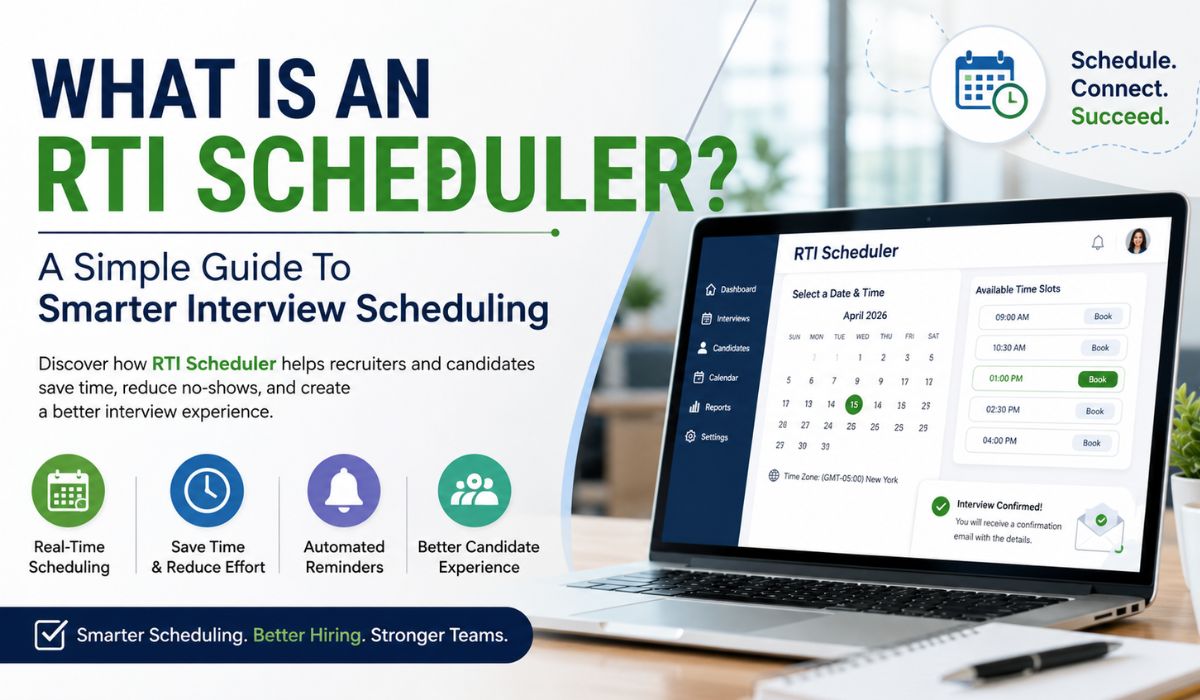
Interview scheduling has changed dramatically over the past few years. As companies compete for top talent and candidates expect faster communication, traditional scheduling methods often create delays that hurt the hiring process. Endless email chains, calendar conflicts, missed appointments, and time-zone confusion can slow recruitment and frustrate everyone involved.
This is where an RTI Scheduler becomes valuable. An RTI Scheduler helps organizations automate and simplify interview scheduling by allowing candidates and recruiters to coordinate meetings in real time. Instead of exchanging multiple emails to find a suitable time, both parties can quickly view available slots and confirm interviews within minutes.
As hiring becomes increasingly digital in 2026, RTI Scheduler solutions have become an important part of modern recruitment technology. Whether you are a recruiter, hiring manager, HR professional, admissions officer, or candidate, understanding how an RTI Scheduler works can help you improve efficiency and create a better scheduling experience.
What Is An RTI Scheduler?
An RTI Scheduler is a scheduling system that allows interviews, meetings, consultations, and professional conversations to be booked and managed in real time. The term is commonly associated with interview scheduling software that connects calendars, displays availability, and automates communication throughout the scheduling process.
The primary goal of an RTI Scheduler is to eliminate unnecessary delays. Instead of relying on manual coordination, the software automatically presents available interview slots to candidates. Once a candidate chooses a suitable time, confirmations and reminders are sent instantly.
In today’s hiring environment, speed matters. Studies consistently show that delays in scheduling can increase candidate drop-off rates. An RTI Scheduler helps organizations move quickly while maintaining a professional candidate experience.
Why Traditional Interview Scheduling Creates Problems
Before scheduling automation became common, recruiters often spent hours coordinating interviews. A simple interview could require several emails, multiple calendar checks, and repeated follow-ups.
This manual process creates several challenges. Recruiters lose valuable time. Candidates may become frustrated by slow responses. Hiring managers often experience calendar conflicts. International candidates may struggle with time-zone differences.
These small problems can add up quickly. In competitive hiring markets, delays of even a few days may cause companies to lose qualified candidates to faster-moving employers. An RTI Scheduler addresses these issues by streamlining the entire scheduling workflow.
How An RTI Scheduler Works
The process begins when recruiters connect their calendars to the scheduling platform. The software automatically reads availability and identifies open time slots.
Candidates receive a scheduling link through email, text message, or a careers portal. They can view available times and select the option that works best for them.
Once a slot is selected, the RTI Scheduler automatically updates calendars, sends confirmations, generates meeting invitations, and schedules reminders. If changes become necessary, candidates and recruiters can often reschedule through the same system without requiring additional emails.
This automation creates a smoother experience for everyone involved while reducing administrative work.
Key Features Of An RTI Scheduler
Modern RTI Scheduler platforms offer far more than basic appointment booking. Calendar synchronization remains one of the most important features because it ensures availability remains accurate across multiple devices and systems.
Time-zone intelligence has become equally valuable. Global hiring requires precise scheduling across countries and regions. Advanced scheduling software automatically converts times to local zones, helping prevent confusion.
Automated notifications are another major feature. Email confirmations, reminder messages, calendar invitations, and follow-up communications keep everyone informed throughout the interview process.
Many platforms also provide reporting dashboards, ATS integration, team scheduling capabilities, interview panel coordination, and analytics that help organizations optimize recruitment performance.
Why Recruiters And Hiring Teams Use RTI Schedulers
Recruiters face constant pressure to move candidates through hiring pipelines quickly. Administrative tasks often consume valuable time that could be spent evaluating talent and building relationships.
An RTI Scheduler reduces administrative burdens significantly. Scheduling tasks that once required multiple emails can now be completed automatically. This allows recruiting teams to focus on strategic hiring activities rather than calendar management.
Hiring managers also benefit because their calendars remain synchronized. The system prevents double bookings and automatically blocks unavailable periods, reducing scheduling conflicts and last-minute changes.
Benefits For Candidates
The candidate experience has become a major factor in recruitment success. Job seekers often judge organizations based on how smoothly the hiring process operates.
An RTI Scheduler improves this experience by giving candidates control over interview booking. Instead of waiting for recruiter responses, candidates can immediately select convenient time slots.
Automated reminders also help candidates prepare more effectively. They receive interview details, meeting links, and scheduling updates without needing to request information manually. This creates a more professional and organized experience from the candidate’s perspective.
How RTI Scheduler Improves The Hiring Process
A faster scheduling process typically leads to a faster hiring process. When interviews are booked quickly, candidates move through recruitment stages without unnecessary delays.
Organizations using interview scheduling software often report improvements in time-to-hire metrics. Automated scheduling reduces bottlenecks and helps recruiters maintain momentum throughout the hiring journey.
Beyond speed, consistency also improves. Every candidate receives the same scheduling experience, communication standards, and reminder processes. This creates a more reliable and scalable recruitment workflow.
Common Challenges And Solutions
Although RTI Scheduler systems provide many benefits, implementation challenges can occur. One common issue involves calendar synchronization errors. These can create availability conflicts if systems are not configured properly.
User adoption can also be a challenge. Some recruiters and hiring managers may prefer traditional scheduling methods. Training and clear communication often help teams adapt successfully.
Privacy concerns are another consideration. Because scheduling platforms handle candidate information, organizations should prioritize software providers that offer strong security measures, data encryption, and compliance features.
Addressing these challenges early helps maximize the value of scheduling technology.
RTI Scheduler Vs Traditional Scheduling Tools
Many people compare RTI Scheduler solutions with popular appointment booking platforms such as Calendly, Microsoft Bookings, and other scheduling applications.
The primary difference is often the recruiting focus. While general scheduling tools work well for appointments and meetings, many RTI Scheduler platforms are specifically designed for recruitment workflows.
They frequently include ATS integration, interview panel coordination, hiring analytics, recruiter dashboards, and candidate communication features that general scheduling tools may not provide.
Organizations with large recruitment operations often benefit from these specialized capabilities.
Features To Look For When Choosing An RTI Scheduler
Selecting the right platform requires careful evaluation. Calendar integration should be a top priority because scheduling accuracy depends on reliable synchronization.
ATS compatibility is equally important. Integrations with systems such as Greenhouse, Lever, Workday, BambooHR, and iCIMS can streamline hiring workflows and reduce manual data entry.
Organizations should also evaluate reporting capabilities, security features, mobile accessibility, automation options, reminder systems, and customization settings. A well-rounded solution supports both recruiters and candidates effectively.
ATS Integration And Why It Matters
An Applicant Tracking System serves as the central hub for recruitment data. When an RTI Scheduler integrates directly with an ATS, information flows automatically between systems.
Interview schedules, candidate status updates, meeting outcomes, and recruiter notes can be synchronized without requiring manual updates. This reduces errors and improves operational efficiency.
As recruitment technology continues to evolve, ATS integration has become one of the most important factors when evaluating interview scheduling software.
Future Trends In RTI Scheduler Technology
The future of RTI Scheduler technology will likely be shaped by artificial intelligence and advanced automation. AI systems are already helping organizations identify optimal interview times based on candidate preferences and interviewer availability.
Predictive scheduling may become more common, allowing systems to recommend meeting times that reduce cancellations and maximize attendance rates.
Virtual interviewing integrations will continue expanding as hybrid and remote work environments remain common. Scheduling platforms may also offer personalized candidate engagement features, automated preparation resources, and smarter communication workflows.
These developments will further reduce administrative effort while improving the overall interview experience.
Real-World Impact Of RTI Scheduler Solutions
Many organizations have already experienced measurable improvements after implementing automated interview scheduling. Recruiting teams often report shorter scheduling cycles, fewer no-shows, and increased productivity.
University admissions departments use similar technology to coordinate applicant interviews efficiently. Sales organizations rely on scheduling automation to book demonstrations and consultations without manual coordination.
Across industries, the common result is improved efficiency. By reducing scheduling friction, organizations can focus more attention on meaningful conversations and decision-making.
How To Successfully Implement An RTI Scheduler
Successful implementation begins with identifying scheduling challenges. Organizations should evaluate current workflows and establish clear goals before selecting a platform.
Pilot programs allow teams to test software with a small group before organization-wide deployment. Training sessions help recruiters, hiring managers, and administrators understand best practices.
Performance metrics should be monitored throughout implementation. Scheduling speed, candidate satisfaction, no-show rates, and recruiter productivity can help measure success and identify opportunities for improvement.
Conclusion
An RTI Scheduler is far more than a calendar tool. It is a modern recruitment solution that simplifies interview scheduling, improves candidate experiences, and helps organizations hire more efficiently.
As hiring becomes increasingly competitive and technology-driven, automated interview scheduling has evolved from a convenience into a strategic advantage. By reducing manual work, improving communication, and accelerating hiring timelines, an RTI Scheduler allows recruiters and candidates to focus on what truly matters—the conversation itself.
Organizations that invest in smarter scheduling technology today are likely to enjoy stronger recruitment outcomes, better candidate engagement, and greater operational efficiency in the years ahead.
FAQs About RTI Scheduler
What Is An RTI Scheduler?
An RTI Scheduler is a real-time scheduling system that helps recruiters, hiring managers, and candidates coordinate interviews automatically. It reduces manual scheduling efforts by providing self-service booking, automated reminders, and calendar synchronization.
How Does An RTI Scheduler Improve Hiring?
It speeds up interview coordination, reduces scheduling delays, minimizes candidate drop-offs, and creates a smoother hiring experience. Faster scheduling often contributes to shorter time-to-hire metrics.
Can An RTI Scheduler Handle Different Time Zones?
Yes. Most modern RTI Scheduler platforms automatically detect and convert time zones. This helps prevent scheduling mistakes and supports global recruitment efforts.
Does An RTI Scheduler Work With Applicant Tracking Systems?
Many platforms integrate directly with ATS software such as Greenhouse, Lever, Workday, BambooHR, and iCIMS. These integrations improve efficiency by synchronizing candidate and interview data.
How Does An RTI Scheduler Reduce No-Shows?
Automated reminders, confirmation messages, calendar invitations, and easy rescheduling options help candidates stay informed and committed to scheduled interviews.
Is An RTI Scheduler Suitable For Small Businesses?
Yes. Small businesses can benefit from reduced administrative work and improved organization. Many scheduling solutions offer scalable plans suitable for companies of all sizes.
What Security Features Should Organizations Look For?
Organizations should prioritize encryption, secure access controls, compliance certifications, privacy protections, and reliable data management practices when evaluating scheduling platforms.
What Is The Future Of RTI Scheduler Technology?
Future developments include AI-powered scheduling recommendations, predictive analytics, enhanced virtual interview integrations, personalized candidate experiences, and deeper automation across recruiting workflows.
Recommended For You: Heteronyms Row Explained: Why One Word Has Two Different Meanings