
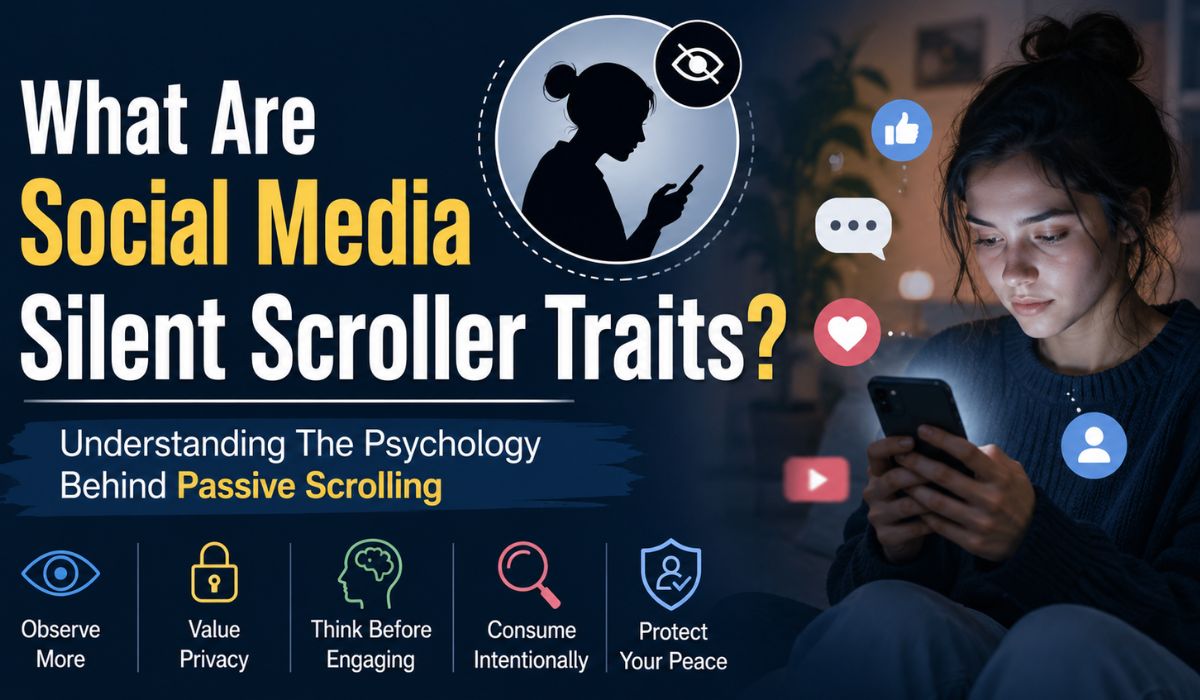
Social media has become one of the most influential parts of modern life. Every day, billions of people open apps like Instagram, TikTok, Facebook, X, Reddit, and YouTube to stay informed, entertained, and connected. Yet a surprising number of users never post, rarely comment, and almost never react publicly to content. Instead, they scroll, watch, read, and move on quietly.
These individuals display what many experts describe as Social Media Silent Scroller Traits. They participate in online communities without leaving much visible evidence of their presence. While active users often attract attention through posts and comments, silent scrollers prefer observation over interaction.
Understanding Social Media Silent Scroller Traits is important because passive social media use has become one of the most common online behaviors in 2026. Whether driven by privacy concerns, personality differences, information gathering, or digital fatigue, silent scrolling reveals a great deal about how people interact with technology and with each other.
What Are Social Media Silent Scroller Traits?
Social Media Silent Scroller Traits refer to the common behaviors, habits, and psychological patterns shown by people who consume content on social media without actively participating. These users spend time watching videos, reading comments, browsing profiles, and following conversations without posting their own opinions.
Unlike influencers, creators, or highly active users, silent scrollers typically prefer remaining in the background. Their online experience is centered on observation rather than visibility. They may open social media several times a day, yet rarely contribute publicly.
This behavior is not unusual. Research on online participation consistently shows that most users consume content far more often than they create it. Silent scrolling is not necessarily a sign of social withdrawal. In many cases, it is simply a preferred way of engaging with digital content.
Why So Many People Choose Passive Social Media Use
The reasons behind passive social media use vary widely. Some people enjoy learning from others without feeling the need to contribute. Others prefer protecting their privacy and limiting their digital footprint.
Many users also feel overwhelmed by the pressure of online performance. Likes, comments, follower counts, and public opinions can create stress. Silent scrolling allows individuals to enjoy content without participating in these social dynamics.
For some, passive scrolling feels safer. They can observe discussions, gather information, and stay informed while avoiding potential criticism or conflict. In a digital environment where every interaction can become public, remaining silent often feels comfortable and practical.
The Psychology Behind Passive Scrolling
The psychology of silent scrolling is deeply connected to human behavior. People naturally observe social environments before participating. Social media simply provides a modern version of this instinct.
Psychologists have long recognized that humans learn through observation. Watching how others behave helps individuals understand social norms, trends, and expectations. Silent scrollers often use platforms as a way to study opinions, lifestyles, and cultural conversations.
Passive scrolling also satisfies curiosity. Every swipe offers something new, whether it is news, entertainment, advice, or personal stories. The brain responds positively to novelty, which helps explain why scrolling can become such a powerful habit.
How The Brain Responds To Endless Scrolling
Modern social media platforms are designed to keep users engaged. Infinite scrolling feeds constantly deliver fresh content, creating a cycle of anticipation and discovery.
When users encounter something unexpected or interesting, the brain releases dopamine, a neurotransmitter associated with motivation and reward. This does not necessarily create addiction, but it does encourage continued engagement.
Silent scrollers experience these reward cycles even without posting. Simply discovering useful information, entertaining videos, or interesting discussions can provide a sense of satisfaction. Over time, however, excessive scrolling may contribute to attention fatigue and mental overload if not balanced with offline activities.
Common Social Media Silent Scroller Traits
Several characteristics frequently appear among passive social media users. One of the most noticeable is strong observational behavior. Silent scrollers often pay close attention to discussions, trends, and social dynamics.
Another common trait is thoughtful information processing. Rather than reacting immediately, they tend to reflect on content privately. Many silent scrollers also place a high value on privacy and personal boundaries.
A preference for independence from social validation is another notable characteristic. These individuals often care less about collecting likes or receiving public recognition. Instead, they focus on gaining information, entertainment, or personal insight from their online experiences.
Different Types Of Silent Scrollers
Not all silent scrollers behave the same way. Some use social media primarily for research and learning. These users follow experts, save useful content, and treat platforms as educational tools.
Others act as private observers. They enjoy keeping up with friends, family members, and public figures without participating directly. Introverted analyzers often spend time observing cultural trends and social behaviors.
There are also habitual scrollers who browse out of routine rather than purpose. Finally, some individuals become doomscrollers, repeatedly consuming negative news and stressful content. Understanding these different patterns helps explain why silent scrolling can have both positive and negative outcomes.
How Social Media Platforms Encourage Silent Scrolling
Technology companies invest heavily in keeping users engaged. Personalized recommendations, short-form videos, endless feeds, and algorithm-driven content are all designed to make scrolling easy and appealing.
These systems reduce the need for active participation. Users can receive a constant stream of content without ever posting or commenting. As algorithms become more sophisticated, they become increasingly effective at predicting what users want to see.
This creates an environment where passive consumption feels effortless. While these features improve convenience, they also increase the likelihood of spending longer periods scrolling without a clear purpose.
The Positive Side Of Social Media Silent Scroller Traits
Social Media Silent Scroller Traits are not inherently negative. In fact, several benefits are often overlooked. Silent scrollers frequently develop strong observation skills because they spend time analyzing content rather than creating it.
Many also enjoy greater privacy. By limiting public interactions, they reduce the amount of personal information shared online. This can help protect their digital identity and reduce exposure to unwanted attention.
Passive users may also experience less pressure related to social comparison and online performance. Without focusing on likes or follower counts, they can engage with content more naturally and on their own terms.
Potential Risks Of Constant Passive Scrolling
Despite its advantages, excessive passive scrolling can present challenges. One common issue is social comparison. Viewing carefully curated content from others can create unrealistic expectations about success, appearance, relationships, or lifestyle.
Long periods of scrolling may also contribute to digital burnout. Consuming large amounts of information without meaningful interaction can leave users feeling mentally exhausted.
In some situations, silent scrolling becomes a way to avoid boredom, stress, or difficult emotions. When this happens, the habit may become less about learning and more about escape, reducing overall well-being.
How Silent Scrolling Can Affect Mental Health
Mental health outcomes depend largely on how social media is used. Moderate, intentional scrolling may have little negative impact. However, excessive passive consumption can sometimes contribute to anxiety, loneliness, and reduced self-esteem.
Research has shown that constant exposure to idealized content can increase self-comparison. Some users may begin feeling that their own lives do not measure up to what they see online.
At the same time, social media can provide valuable information, inspiration, and community support. The key factor is balance. Healthy digital habits help users benefit from social platforms without becoming overwhelmed by them.
Are Silent Scrollers Introverted, Shy, Or Socially Anxious?
A common misconception is that all silent scrollers are introverts or socially anxious. In reality, Social Media Silent Scroller Traits appear across many personality types.
Introverted individuals may naturally prefer observation and reflection. However, extroverted people can also become silent scrollers when they use social media primarily for information gathering rather than interaction.
Social anxiety may influence some users, but it is not the defining characteristic of passive scrolling. Many silent scrollers simply prefer privacy, independence, or a less public online experience.
Signs Passive Scrolling May Be Becoming Unhealthy
Silent scrolling becomes problematic when it begins interfering with daily life. Spending hours online without purpose, feeling emotionally drained after scrolling, or neglecting real-world relationships can signal an unhealthy pattern.
Another warning sign is the inability to reduce screen time despite wanting to do so. Some users find themselves repeatedly checking social media even when it no longer feels enjoyable.
When scrolling consistently replaces meaningful activities such as work, exercise, sleep, or social interaction, it may be time to reassess digital habits and establish healthier boundaries.
Practical Ways To Build Healthier Social Media Habits
Creating healthier social media habits does not require abandoning technology. Small adjustments can make a significant difference. Limiting daily screen time helps prevent excessive consumption and encourages more intentional use.
Curating feeds is another effective strategy. Following educational, positive, and relevant content creators can improve the overall quality of the online experience. Regular digital breaks also help restore focus and reduce mental fatigue.
Many experts recommend balancing online activity with offline hobbies, exercise, reading, and face-to-face relationships. These activities provide the depth and connection that social media alone cannot fully replace.
What Social Media Silent Scroller Traits Reveal About Modern Digital Culture
The rise of Social Media Silent Scroller Traits reflects broader changes in digital culture. Modern users are becoming more aware of privacy concerns, algorithmic influence, and the emotional effects of online engagement.
Many people no longer feel obligated to participate publicly in every conversation. Instead, they choose selective engagement based on their personal goals and comfort levels.
Silent scrolling demonstrates that social media participation exists on a spectrum. Being present online does not always require active posting. For millions of users, observation itself is a meaningful form of participation.
Conclusion
Social Media Silent Scroller Traits offer a fascinating look at how people interact with digital platforms in 2026. While active users often receive the most attention, silent scrollers make up a large portion of the online population. Their behavior reflects a mix of curiosity, privacy awareness, observation, and personal preference.
Passive scrolling is neither entirely positive nor entirely negative. Its impact depends on why people scroll, how often they do it, and whether it supports or interferes with their well-being. By understanding the psychology behind passive social media use, readers can make more informed decisions about their own online habits and build a healthier relationship with technology.
FAQs About Social Media Silent Scroller Traits
What Is A Silent Scroller On Social Media?
A silent scroller is someone who regularly consumes content on social media but rarely posts, comments, shares, or reacts publicly. They prefer observing content rather than actively participating in discussions.
Are Social Media Silent Scroller Traits Normal?
Yes. Most social media users engage with content passively. Silent scrolling is a common and normal form of online behavior that exists across different age groups and personality types.
Why Do People Watch Content But Never Post?
People may choose not to post because they value privacy, prefer observation, avoid online conflict, feel overwhelmed by social pressure, or simply enjoy consuming content without contributing publicly.
Is Passive Social Media Use Bad For Mental Health?
Not necessarily. Passive use can be healthy when it is intentional and balanced. Problems are more likely to arise when scrolling becomes excessive, compulsive, or driven by negative emotions.
Can Silent Scrolling Become Addictive?
Silent scrolling can become habitual because social media platforms provide a constant stream of new content. While not everyone develops problematic use, excessive scrolling can be difficult to control for some individuals.
What Is The Difference Between A Silent Scroller And A Lurker?
The terms are similar. Silent scrollers are usually associated with social media platforms, while lurkers often refer to people who observe discussions in forums, online communities, or discussion boards without participating.
How Can Someone Reduce Excessive Passive Scrolling?
Reducing screen time, setting app limits, taking digital breaks, curating content feeds, and focusing on offline activities can help create healthier and more intentional social media habits.
Recommended For You: AURÖ Explained: Supporting The Next Generation Of Environmental Economists